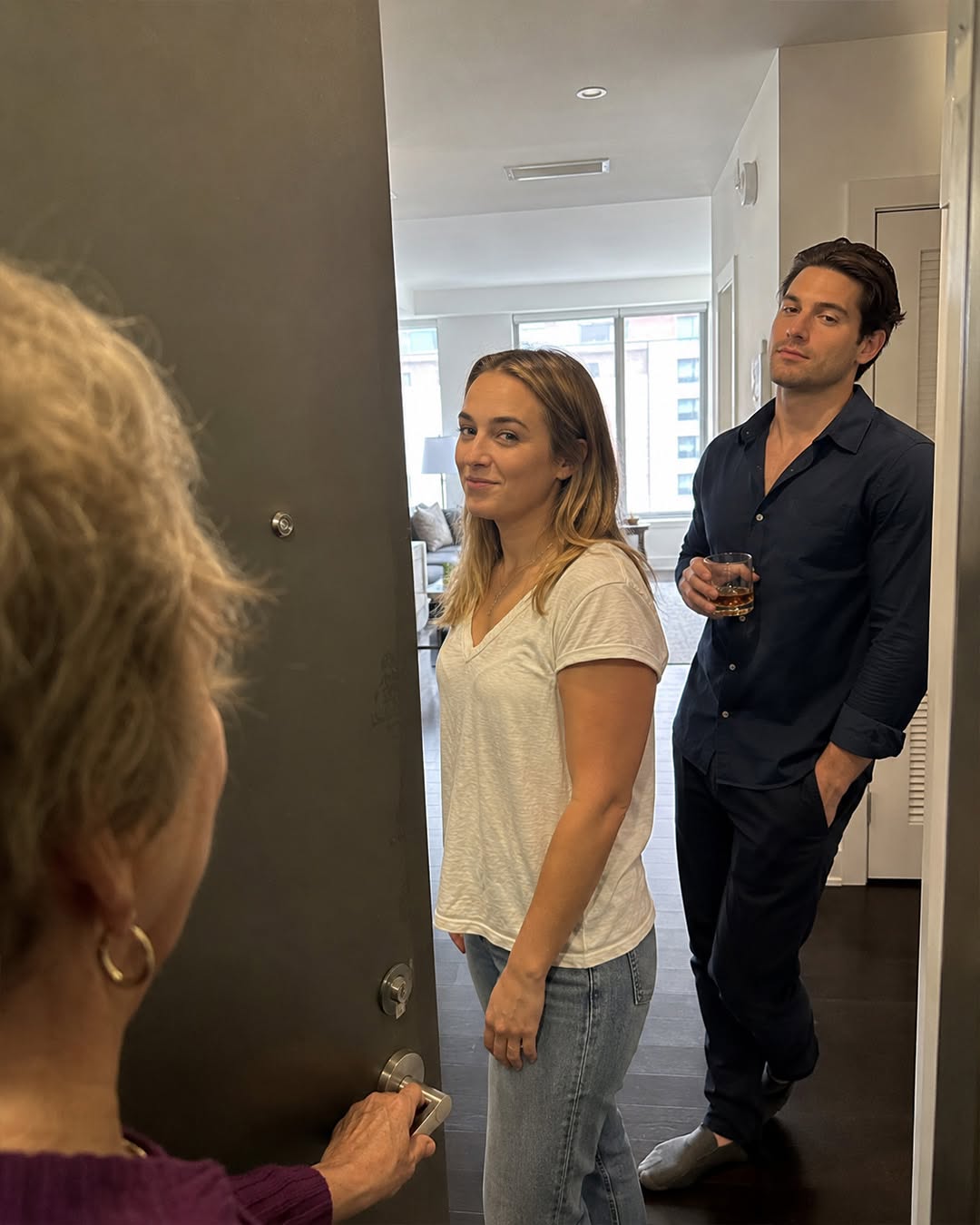
Kiedy moja córka otworzyła drzwi do mieszkania, uśmiechała się.
Nie ten miękki uśmiech, który pamiętałam z przedszkolnych poranków, gdy Jessica biegała po chodniku szkolnym z podskakującym plecakiem i rozwiązanymi sznurowadłami.
Nie ten dumny uśmiech, który obdarzyła mi na ukończeniu szkoły, gdy zobaczyła mnie i Arthura na trybunach, machających jak głupcy, bo nasze jedyne dziecko przeszło przez scenę.
Ten uśmiech był starszy. Zimniej. Zadowolony.
Za nią stał mój zięć, Vincent, ubrany w wyprasowaną granatową koszulę i trzymający szklankę whisky o dziesiątej rano. Oparł ramię o ścianę ich drogiego mieszkania w centrum miasta jak człowiek oglądający ostatnią scenę filmu, który sam napisał.
Jessica spojrzała na moją walizkę, potem na moją twarz.
"Teraz jesteś bezdomna, mamo."
Tak po prostu. Nie było drżenia w jej głosie. Nie ma wstydu w oczach. Bez wahania, jakby ćwiczyła zdanie i uznała, że brzmi właściwie.
Stałam na korytarzu z torebką podróżną wciąż wiszącą na ramieniu. To była ta sama brązowa skórzana torebka, którą nosiłem przez Londyn, Paryż i Rzym. Moja walizka stała obok kostki, a jedno koło pękło było pęknięte podczas lotu do domu.
Mój płaszcz wciąż pachniał lekko kawą z lotniska, deszczem i cynamonową gumą, którą kobieta obok mnie przeżuła aż z Newark.
Przez chwilę się nie ruszyłem. Spojrzałem na moje jedyne dziecko i próbowałem znaleźć dziewczynkę w jej oczach. Nie mogłam.
Vincent cicho się zaśmiał. Nie głośno. Nie teatralny. Tylko tyle, żebym to usłyszał.
Moje ręce powinny się trząść. Nie zrobili tego. Uśmiechnąłem się.
Jessica zauważyła to pierwsza. Jej uśmiech się przerzedził, a potem zniknął.
"Dlaczego się uśmiechasz?" zapytała.
Vincent wyprostował się trochę.
"Co cię bawi, Eleanor?"
Spojrzałem z mojej córki na mężczyznę, którego wybrała, mężczyznę, który przez zbyt wiele lat wspierał jej decyzje. Potem odwróciłem się i ruszyłem z powrotem w stronę windy.
Nie błagałam. Nie krzyczałem. Nie pytałem, dlaczego moja córka sprzedała dom, w którym mieszkałem ponad czterdzieści lat, gdy byłem za granicą.
Bo już wiedziałem dlaczego. Pieniądze. Dług. Vincent. I córkę, która przestała widzieć we mnie matkę, a zaczęła widzieć mnie jako starą kobietę siedzącą na cennej rzeczy.
Nazywam się Eleanor Hayes. Mam siedemdziesiąt lat. Aż do tamtego poranka dom przy Maple Street był ostatnią solidną rzeczą, którą myślałem, że mi została.
Arthur i ja kupiliśmy ten dom, gdy Jessica miała pięć lat. Wtedy nie było to nic wyszukanego. To było zmęczone ceglane ranczo na cichej ulicy poza Cedar Grove, z wyblakłymi okiennicami, upartymi drzwiami wejściowymi i podwórkiem, które co roku w kwietniu zalewało się z tyłu.
Kuchnia miała żółte linoleum. Umywalka w łazience kapała, jeśli za bardzo przekręciło się klamkę. Piwnica pachniała starym drewnem i deszczem. Ale dla nas to był zamek.
Arthur pracował na budowie, wychodząc przed wschodem słońca z kawą w metalowym termosie i kurzem z płyt gipsowych we włosach. Sprzątałem domy dla kobiet, które zostawiały listy zakupów na marmurowych blatach i narzekały, jeśli przesunąłem ramkę o pół cala.
We saved for five years. No vacations. No new furniture. No dinners out unless you counted the pancake special at Miller’s Diner after church, where Arthur always ordered extra bacon and pretended it was for Jessica.
When we finally got the keys, it rained so hard the gutters overflowed. Arthur carried me across the threshold anyway, both of us laughing like newlyweds in an old movie. Jessica clapped from the porch with her pink rain boots splashing in a puddle.
“This is ours, Eleanor,” Arthur said, setting me down on the scratched hardwood floor. “No one can take it from us.”
For forty years, I believed him. That house held our whole life.
Jessica’s first lost tooth, tucked in a sandwich bag because I could not find an envelope. Christmas mornings with wrapping paper under the sofa. Arthur’s boots by the back door. The pencil marks on the pantry wall where we measured Jessica every August before school started.
It held bad days too. The winter the furnace quit and Arthur worked overtime for three weeks to replace it. The summer my mother moved into the guest room after her stroke. The year Jessica turned sixteen and screamed that she hated us because we would not buy her a car we could not afford.
And then, years later, it held the worst morning of my life.
Arthur died at the kitchen table with the newspaper open beside his coffee. One minute he was reading about road repairs near the county line. The next, he pressed one hand to his chest and whispered my name.
“Eleanor.”
By the time the ambulance came, my husband was gone.
After that, the house grew quiet in a way I cannot explain to anyone who has never outlived the person who made ordinary rooms feel alive. The refrigerator hummed too loudly. The hallway seemed longer. The chair across from mine at breakfast became something I avoided looking at.
People came for the first two weeks. Women from church brought casseroles wrapped in foil. Neighbors left flowers on the porch.
Mr. Coleman, our lawyer, sat with me at the kitchen table and helped me sort through Arthur’s papers while Jessica scrolled on her phone and said she was too overwhelmed to think.
Then everyone went back to their own lives. That is how grief works in America.
People are very kind while the coffee urn is still set up in the church basement. Then the world keeps moving, and you are expected to learn how to stand in line at the pharmacy, buy one pork chop instead of two, and answer “fine” when the cashier asks how you are.
Jessica visited less after Arthur died. At first, I made excuses.
She was busy. She had a marriage. She had responsibilities. The drive across town was harder with traffic. Vincent didn’t like sitting too long. Work was stressful. Sundays were complicated. A mother can live on excuses for years if she has to.
Then Vincent lost his job. Jessica called it “bad luck.” She said there had been trouble at his company. Something about accounts. Something about a misunderstanding with a client.
She talked fast, the way she did when she wanted me to stop asking questions before I started.
I did not press. I had been raised not to embarrass family by dragging things into the light. My mother used to say, “Every house has a closed room, Eleanor. Don’t go opening doors that aren’t yours.”
But after Vincent lost that job, their visits changed. Jessica no longer came in and kissed my cheek before looking in the refrigerator for sweet tea. She walked through my house slowly, glancing at windows, floors, cabinets, the old built-in shelves Arthur had made himself.
Vincent began coming inside too. Before that, he had always preferred to wait in the car with the engine running, as if my little brick ranch might infect him with middle-class disappointment.
But suddenly he was interested. He walked from room to room with his hands in his pockets, making little thoughtful noises.
“Hardwood under this carpet?”
“Yes,” I said.
“Original?”
“Arthur refinished it himself.”
“Makes a difference.”
I did not understand then that he was not admiring anything. He was calculating. He asked questions in the voice people use when they want to sound casual.
“How much do you think this place is worth now?”
“Mortgage all paid off?”
“You ever think about downsizing, Eleanor?”
I answered because I trusted my daughter. Or maybe because I wanted to. There is a difference, and I learned it too late.
Jessica started calling more often that spring. Her voice became sweet in a way that made me sad before it made me suspicious.
“Mom, have you eaten?”
“Mom, do you need anything from Costco?”
“Mom, you really shouldn’t be climbing that step stool anymore.”
For a while, I let myself enjoy it. I let myself believe my daughter was finding her way back to me.
Then they brought up Europe. We were sitting in my living room on a Saturday afternoon. Sunlight came through the lace curtains Arthur had always hated but never made me take down.
Jessica sat on the sofa with her hands folded too neatly in her lap. Vincent stood near the mantel, looking at the framed photo of Arthur in his work jacket.
“Mom, you deserve to enjoy yourself,” Jessica said.
I laughed because the idea sounded so far away from my real life.
“Enjoy myself where? The senior center bingo night?”
“No,” she said. “I’m serious. London. Paris. Rome. You’ve talked about seeing those places your whole life.”
I had. When Jessica was little, Arthur and I used to watch travel shows on PBS after she went to bed. He would point at cathedrals and bridges and say, “One day, Ellie. When the house is paid off.”
But life kept needing money. Braces. A new transmission. Medical bills. College deposits. Arthur’s funeral. “One day” became a phrase we said until we stopped saying it.
Vincent turned from the mantel.
“We’ll pay for everything,” he said. “Flights, hotels, tours. You’ve done so much for Jessica. Let us do something for you.”
It sounded generous. That was the trick. I should have wondered why a man without a steady job was offering me Europe.
But Jessica leaned forward and took my hand.
“Please, Mom. Daddy would want you to go.”
That was the sentence that got me. Arthur would have wanted me to go. Or at least I wanted to believe he would. Grief makes a person hungry for permission. It makes you hear blessings in places where there may only be bait.
A week later came the power of attorney. Jessica brought the papers in a neat folder from an office supply store. She set them on my kitchen table beside a tin of cookies from the grocery bakery.
“Just for emergencies,” she said. “If something happens while you’re gone. Bills, paperwork, house things. Nothing important.”
Nothing important. Three words that can ruin a life.
Vincent stood by the sink, smiling that polished smile of his.
“It’s standard,” he said. “Travelers do it all the time.”
The notary was a woman from Jessica’s bank. I was so caught up in the excitement of the trip that I barely listened as she walked through the standard legal warnings. I just nodded like I understood every line.
I heard words like authority, financial matters, real property, legal execution. They floated above me like smoke.
Something in my chest started ringing, low and sharp, like a smoke alarm behind a closed door. I ignored it. I signed because Jessica was my daughter.
The day before my flight, Vincent came by with more papers.
“Extra authorization,” he said. “Routine travel stuff.”
Jessica stood behind him, smiling too hard.
“Trust your daughter, right?”
That night, I did not sleep. At five in the morning, I made coffee in Arthur’s old mug and stood in the kitchen while the sun came up over Maple Street.
Across the road, Maria Sanchez was dragging her recycling bin to the curb in her robe and slippers. A school bus hissed at the corner. Somebody’s dog barked behind a white fence.
Everything looked normal. Nothing felt normal. Arthur’s voice came back to me as clearly as if he were standing beside the sink.
“Shark eyes.”
That was what he had called Vincent the first night they met. Jessica had brought him to Thanksgiving six years earlier.
He was handsome in a sharp way, all clean cuffs and expensive cologne, with a smile he turned on and off like a porch light. He complimented my mashed potatoes, laughed at Arthur’s jokes, and helped carry folding chairs back to the garage.
After they left, I said, “He seems nice.”
Arthur dried a serving spoon and looked out the kitchen window at Vincent’s car backing from the driveway.
“He smiles without warmth,” he said. “Watch that one, Ellie. Shark eyes.”
At the time, I told him he was being too hard on the man. Standing in my kitchen years later with travel papers on the table and a knot in my stomach, I wondered if Arthur had seen something I had refused to see.
At nine o’clock that morning, I went to see Mr. Coleman. His office sat above the old pharmacy downtown, across from the county courthouse, with worn carpet, squeaky stairs, and framed photos of Little League teams he had sponsored for twenty years.
He had handled our closing when Arthur and I bought the house. He had handled Arthur’s estate. He had known Jessica when she still came to his office and stole peppermints from the glass bowl on his receptionist’s desk.
He did not look surprised when I told him why I was there. That frightened me.
I told him everything. The trip. The documents. Jessica’s sudden kindness. Vincent’s questions. The strange feeling I had while signing.
Mr. Coleman listened without interrupting. When I finished, he took off his glasses and rubbed the bridge of his nose.
“Eleanor,” he said carefully, “with what you signed, they may try to sell, transfer, or borrow against your property.”
My blood went cold.
“Can they do that?”
“They can try.”
“Can we stop it?”
He looked toward the window, where the courthouse flag was snapping in the wind.
“Maybe,” he said. “But we need to move today.”
So we did. Quietly. Legally.
Before I ever stepped on that plane, the house on Maple Street was transferred into the Hayes Housing Trust, the trust Arthur and I had once discussed years earlier but never finished. Mr. Coleman updated it, filed it, and made sure the house no longer belonged to me personally.
The trust had a purpose. If anything happened to me, the house would support a local housing program for widows, veterans, and working families trying to rebuild. It was the kind of thing Arthur would have wanted. He had spent half his life teaching younger men how to hold a hammer, read a blueprint, and show up on time.
That house was never just property to him. It was proof that ordinary people could build something honest and keep it.
Mr. Coleman also called a title attorney he trusted, a quiet woman named Dana Price who had the calmest voice I had ever heard. She reviewed the filings, added protections, and placed notices where notices needed to be placed.
She told me not to discuss any of it with Jessica or Vincent.
“Let them show us what they intend to do,” she said.
That sentence made my stomach turn. Because by then, I already knew.
I flew to Europe the next morning. I wish I could tell you I enjoyed it. I tried.
I stood in Westminster Abbey and thought of Arthur’s hand in mine. I walked along the Seine under a gray sky and cried behind my sunglasses. I tossed a coin into a fountain in Rome and felt foolish because I did not know what to wish for.
Everywhere I went, people took pictures of beautiful things. I kept checking my phone.
Jessica called every few days.
“Are you resting, Mom?”
“Having fun?”
“Send pictures.”
She sounded cheerful, but there was something thin underneath it, like paper stretched too tight over a frame. She never asked about the house. Not once.
Then, one rainy evening in Paris, while I sat alone in a small hotel room eating soup from room service, I received a message from Maria Sanchez.
Eleanor, call me. It’s urgent. It’s about your house.
My fingers went numb before I even dialed. Maria answered on the first ring.
“I didn’t want to scare you,” she said, already scared herself. “But there’s a For Sale sign in your yard.”
I closed my eyes.
“What kind of sign?”
“Not just listed. Sold. It says sold.”
For a moment, all I could hear was rain tapping against the hotel window.
Maria kept talking. She had seen strangers walking through the house. She had watched a moving company measure the front door. She had asked one of the men what was happening, and he had said the property had closed fast.
Fast. That was Vincent’s style.
He had bypassed the standard bank delays by finding a frantic young couple with an all-cash offer, pushing the title paperwork through an unprincipled independent closing agent he knew from his old job. Take what you can before anyone has time to ask questions.
By morning, I knew more. Documents had been signed using the power of attorney I had given Jessica. A sale had been rushed through. A closing had been held. The money had moved.
I canceled the rest of my trip and flew home.
By the time the plane landed in Newark, I had not slept in almost thirty hours. My eyes burned. My knees ached. My heart felt strangely steady, as if fear had burned itself out somewhere over the Atlantic and left behind something harder.
When the taxi turned onto Maple Street, I saw the sign before I saw the house. A red sale sign leaned in my yard like a flag planted after a conquest.
The porch light was off. The curtains were different. There was a strange car in the driveway.
My key no longer worked. My own front door rejected me.
A woman I did not know opened it after I knocked. She looked startled, then embarrassed. She was in her thirties, with tired eyes and a toddler holding onto her pant leg.
“Can I help you?” she asked.
I looked past her into my living room and saw boxes stacked against the wall. My wall. Arthur’s wall. The mantel where our family photos had stood was bare.
“I’m Eleanor Hayes,” I said.
Her face changed.
“Oh.”
One word, full of trouble.
Behind her, a man appeared. He recognized my name too. They were not villains. That became clear immediately. They were a young family who had bought what they believed was a lovely home in a safe neighborhood with good schools.
They had no idea they had stepped into a family betrayal wrapped in legal paper.
“I’m sorry,” the woman whispered.
So was I. Not for myself alone. For all of us.
My phone buzzed before I could say more. Jessica.
Come to the apartment, Mom. We need to talk.
I almost laughed in the middle of my stolen porch. We need to talk. That is what people say after they have already done the damage.
So I went. And that was where my daughter opened her door, smiled at my suitcase, and said, “Now you’re homeless, Mom.”
When I reached the elevator, I stopped. Jessica was still standing in the doorway, watching me like she could not decide whether to be angry or afraid.
I turned just enough to see Vincent over her shoulder.
“Can I ask you one thing, Jessica?”
She crossed her arms.
“What?”
I looked straight at him.
“Did you check the paperwork carefully before you sold it?”
For the first time, Vincent’s face changed. Not much. Just a flicker. A little color leaving his cheeks. A hesitation too small for strangers, but not for a woman who had spent forty years reading men across kitchen tables, hospital counters, bank desks, and funeral homes.
Jessica saw it too.
“What is she talking about?” she asked.
Vincent did not answer. That told me everything.
I walked back into the apartment slowly and set my purse on the glass table by the door. Jessica had once called that table Italian. I had helped her pay for it with money she said was for car repairs.
The apartment was spotless in a cold way. Gray sofa. White rug. Tall candles nobody had ever lit. A framed black-and-white photograph of a city neither of them had visited. Everything matched, and nothing looked lived in.
I opened my purse and removed a blue folder. Vincent stared at it like it was alive. Jessica looked annoyed.
“What is that?”
“The paperwork your husband didn’t read.”
Vincent’s jaw tightened.
“Eleanor—”
“I haven’t heard you say my name that politely in years.”
Jessica turned to him.
“What paperwork?”
Still, he said nothing. So I did.
“The house on Maple Street wasn’t mine anymore when you sold it.”
Jessica blinked. Then she laughed once, sharp and disbelieving.
“What?”
“It wasn’t mine.”
“Of course it was.”
“No,” I said. “Not when the sale happened.”
The room became very quiet. Even the ice in Vincent’s glass seemed to stop moving.
“The morning before I flew to Europe,” I continued, “I met with Mr. Coleman.”
Jessica’s face went pale. She knew that name. Mr. Coleman had handled Arthur’s estate. He had sat in our living room after the funeral and explained things gently while Jessica checked her phone.
“Why would you do that?” she asked.
“Because your sudden generosity frightened me.”
That landed harder than I expected. For a moment, she looked almost wounded. Good, I thought. Let the truth touch you somewhere.
I opened the folder and placed the first page on the table.
“The house was transferred into the Hayes Housing Trust before I boarded the plane.”
Vincent closed his eyes. There it was. He knew enough now.
Jessica looked at him.
“What does that mean?”
He swallowed.
“It means there may be a problem.”
“No, Vincent,” I said. “A problem is forgetting to pay the electric bill. This is a title disaster.”
Jessica’s hand went to the back of a chair.
“You told me it was legal.”
“It was supposed to be,” Vincent snapped.
The second the words left his mouth, he knew he had made a mistake. Jessica’s head turned slowly.
“Supposed to be?”
He looked away. That was the first crack between them. Fear does that. It separates people who were brave only when they thought someone else would carry the blame.
“The buyers paid nearly nine hundred thousand dollars for a property your paperwork had no authority to sell,” I said. “Their attorney has already contacted the title company. Mr. Coleman has contacted the trust attorney. The county recorder’s office is reviewing the filings.”
Jessica sat down as if her knees had finally understood what her mind refused to accept.
“No.”
“Yes.”
“But the money…” Her voice faded.
I looked at Vincent. His face had gone hard now. Not proud. Not confident. Just cornered.
“Yes,” I said quietly. “The money.”
Two hundred thousand dollars of Vincent’s debt had vanished within days of the closing. I did not know every detail yet, but I knew enough.
Mr. Coleman had warned me. Dana Price had warned the title company. Maria had heard whispers from a cousin who worked at a bank branch two towns over.
In small American towns, people pretend not to talk. They talk anyway. They just call it concern.
Jessica pressed her fingers to her lips.
“You knew?”
“Not everything.”
Then I looked at Vincent.
“But enough.”
Jessica began to cry. Not the soft tears of regret. Not yet. These were frightened tears. Consequence tears. The kind that come when a person realizes the story they told themselves will not survive contact with paperwork.
“Mom,” she whispered.
That word almost broke me. Mom. Not Eleanor. Not an obstacle. Not the old woman in the paid-off house. Mom.
For one painful second, I saw her at eight years old, standing in the kitche