n with flour on her nose because Arthur had let her help make biscuits. I saw her at seventeen, crying in the driveway after her first heartbreak.
I saw her at twenty-eight, walking down the church aisle toward Vincent while I sat alone in the front pew, wishing Arthur had lived to see it and wondering if he would have stood up to stop it.
I saw the daughter I raised and the woman sitting in front of me, and I could not make them fit inside the same body.
“I can’t fix this,” I said.
Her face crumpled.
“You can tell them it was a misunderstanding.”
“No.”
“You can say you gave permission.”
“I won’t.”
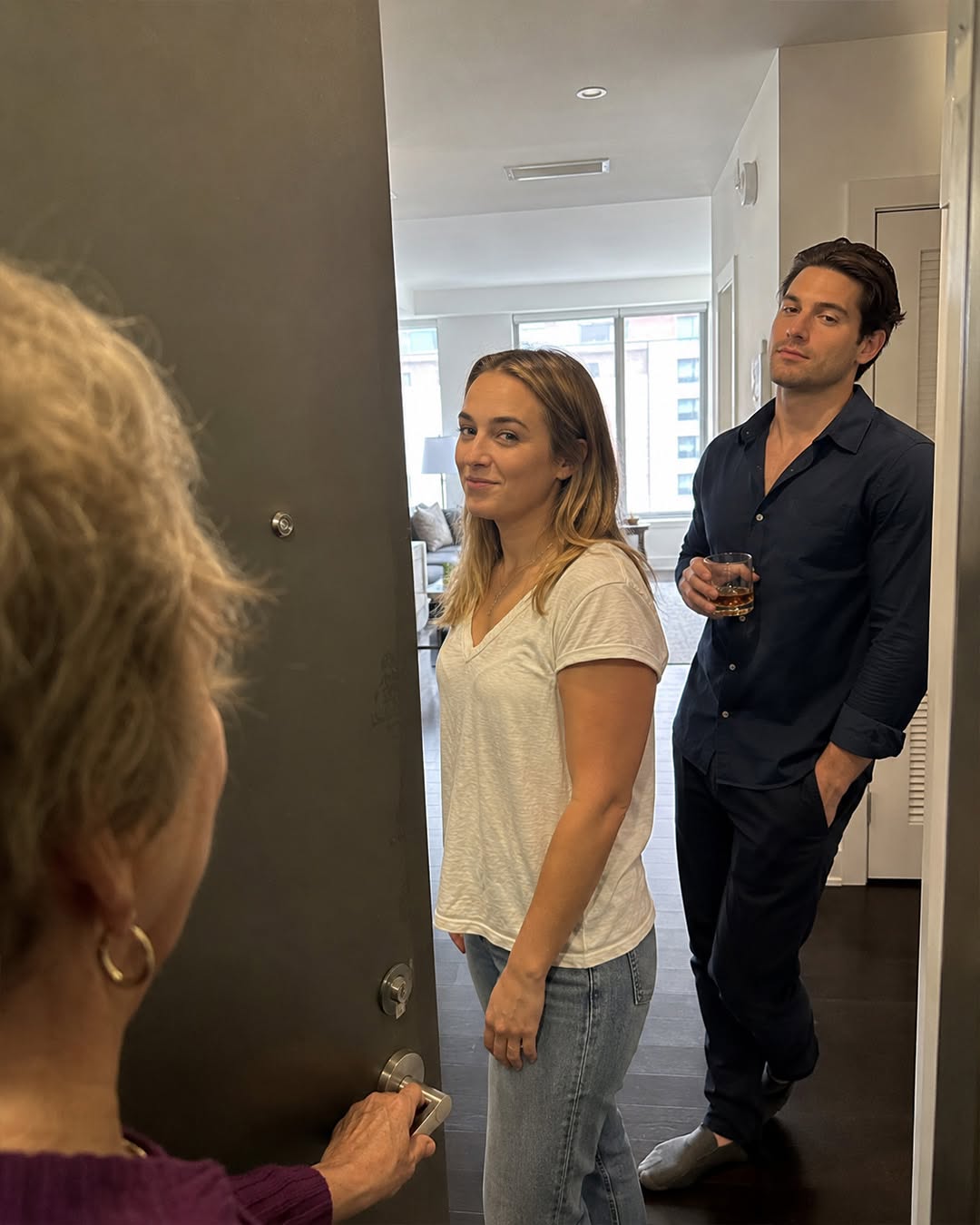
Vincent set his glass down too hard.
“Be careful, Eleanor.”
The old me might have flinched. The old me might have softened her voice to keep the peace. But something in me had gone still.
“You sold a house that did not belong to you,” I said. “You used my trust, my grief, and my daughter’s signature to do it. I am being very careful.”
He looked at Jessica.
“Tell her.”
Jessica stared at him.
“Tell her what?”
His mouth opened, then closed. That was when I realized there was more. Jessica saw it too.
“What did you do, Vincent?”
He rubbed his forehead.
“It was temporary.”
Nobody spoke.
“I was going to put it back,” he said.
I almost laughed, but there was nothing funny in the room.
“Put what back?”
He did not answer me. Jessica stood.
“Vincent.”
He turned on her then, ugly in the way cowards get ugly when blame finally has nowhere else to go.
“You wanted the apartment,” he said. “You wanted the car. You wanted everyone at church thinking we were fine. Don’t stand there and act innocent.”
Jessica recoiled as if he had slapped the air between them.
There it was. The marriage behind the photographs. The debt behind the clothes. The shame behind the polished smiles.
For years, I had watched my daughter become quieter around him. I had mistaken it for maturity. Maybe it was fear. Maybe pride. Maybe both. But whatever had happened in their marriage, she had still signed. She had still opened that door. She had still said, “Now you’re homeless, Mom.”
I could feel sympathy trying to rise inside me, because I am her mother and mothers are built with dangerous mercy. But mercy without truth is just another way of helping people destroy themselves.
I gathered the papers and returned them to the folder.
“The trust will challenge the sale,” I said. “The buyers will be protected by their title insurance. The attorneys will follow the money. What happens after that depends on what each of you tells the truth about.”
Jessica wiped her face.
“Are you going to press charges?”
“That is not entirely up to me anymore.”
That frightened her more than anger would have. Good. Anger can be argued with. Systems cannot.
Outside the window, traffic moved along the avenue. A delivery truck backed up with a soft beep. Somewhere below us, a woman laughed into her phone, living an ordinary morning.
Inside that apartment, my daughter’s life was coming apart one document at a time.
I walked to the door. Jessica followed me.
“Mom, where will you go?”
The question might have sounded loving if she had asked it before selling my home.
“Maria has a guest room,” I said. “And Mr. Coleman has already arranged temporary housing through the trust.”
Her face twisted with something like shame.
“You planned everything.”
“No,” I said. “I protected myself. There is a difference.”
Maria Sanchez was waiting outside her little blue house when the rideshare dropped me off. She did not ask questions first. She just hugged me.
Maria had lived across from us for thirty-one years. She had brought over soup when Arthur had the flu. She had watched Jessica after school when my mother was sick. She had stood beside me at Arthur’s funeral with tissues stuffed in both sleeves like ammunition.
Her guest room smelled like lavender detergent and old books. A small quilt lay folded at the foot of the bed. On the nightstand, she had placed a glass of water, two aspirin, and a little dish of peppermints.
“I didn’t know what else to do,” she said.
“You did enough.”
That night, I lay awake listening to the soft hum of her refrigerator and the occasional sound of a car passing on Maple Street. My house was visible from her front window, but I did not look. Not yet.
By morning, Mr. Coleman had left three messages. Dana Price had left two. The title company wanted documentation. The buyers’ attorney wanted a meeting. The county recorder’s office had questions about timing.
There are moments when life becomes less about feelings and more about folders.
So I put on the navy dress I had worn to Arthur’s memorial service, brushed my hair until my scalp hurt, and went downtown.
The meeting was held in a conference room that smelled like coffee and toner. Around the table sat Mr. Coleman, Dana Price, a representative from the title company, the buyers’ attorney, and eventually the buyers themselves, the young couple from my front door.
The woman’s name was Emily. Her husband was Grant. Their little boy had already picked the bedroom with the big window. Their daughter had called the maple tree out front “the red leaf tree,” though it was still summer and the leaves had not turned yet.
When Emily apologized to me again, I shook my head.
“You didn’t do this,” I said.
Her eyes filled.
“I just wanted a home.”
“So did I,” I said.
That was the first time all day the room went quiet.
Legal people know how to talk around pain. They say things like chain of title, unauthorized conveyance, recorded instrument, proceeds, liability. Those words have their place. They keep the world from falling into shouting.
But under all of it was a simple truth. My daughter had sold something she had no right to sell. Vincent had taken money he had no right to touch. And everybody else had been dragged into their hunger.
The weeks that followed were not dramatic in the way television makes things dramatic. No one burst into a courtroom. No judge slammed a gavel. No one confessed under a spotlight.
Real consequence is quieter. It comes in certified letters. It comes in phone calls at 8:15 in the morning. It comes in bank records, title searches, emails with attachments, and meetings where people say very little because the documents say enough.
Jessica called me eleven times the first week. I did not answer. She left messages.
The first was angry.
“Mom, you’re blowing this out of proportion.”
The second was frightened.
“Please call me. Vincent says the attorney is making everything sound worse than it is.”
The fourth was almost childlike.
“I don’t know what to do.”
I listened to all of them in Maria’s kitchen while she pretended to wipe the same clean counter over and over.
“Do you want me to sit with you?” she asked.
“No,” I said. Then I reached for her hand. “Yes.”
The sixth message was the one that hurt most.
“Daddy would be ashamed of you.”
I played it twice. Not because I needed to hear it again, but because I needed to make myself believe she had really said it.
Maria’s face went hard.
“That girl better be glad I’m Catholic.”
Despite everything, I laughed. It was the first laugh that did not feel like breaking glass.
The sale began to unravel piece by piece. The trust records showed the transfer had been completed before Jessica signed the closing paperwork. The authority she claimed under the power of attorney no longer matched the ownership.
The safeguards Mr. Coleman and Dana had filed were not perfect shields, but they were enough to expose the problem and freeze what could be frozen.
The buyers were protected by their title insurance. That mattered to me more than I expected. Emily and Grant had not deserved to lose their savings because my family had lost its soul.
Vincent did not come out so protected. His financial records became part of the investigation. The debt was real. The story around it was not.
His job loss had not been bad luck. His “misunderstanding” had involved money that belonged to other people. Men like Vincent count on polite people staying quiet because silence is cheaper than confrontation.
This time, silence cost too much.
Jessica moved out of the apartment before Thanksgiving. I heard it first from Maria, who heard it from a woman at church, who heard it from Jessica herself in the parking lot after Sunday service. Jessica had been sitting alone in her car with sunglasses on though the sky was gray.
I hated that I could picture it. I hated that part of me wanted to go to her.
Motherhood does not turn off just because your child betrays you. That is one of its cruelties. A stranger can wrong you, and you can shut the door. A child can wrong you, and some part of you still listens for crying in the night.
Jessica called me again on a Tuesday evening while Maria and I were eating chicken pot pie from the grocery deli. I stared at the phone until it stopped ringing. Then it rang again. And again.
Maria did not tell me what to do. That is why I trusted her. She simply reached across the table and turned down the television.
On the fourth call, I answered. For a moment, neither of us spoke.
Then Jessica said, “Mom?” Her voice was smaller than I remembered.
“Yes.”
She began crying. Not the frightened tears from the apartment. These were different. Thinner. Exhausted.
“I’m sorry,” she said.
I closed my eyes. I had imagined those words for months. I had imagined them healing something. I had imagined my heart opening at the sound of them. Instead, I felt tired.
“I know,” I said.
“No, you don’t. I mean it. I’m sorry. I told myself it was temporary. Vincent said we would fix it before you got back. He said you’d be better off in a condo anyway, somewhere with an elevator, somewhere safer. He said the house was too much for you. He said—”
“Jessica.”
She stopped.
“You are not a girl repeating what a man told you. You are a grown woman who signed papers.”
The silence on the line was heavy.
“I know.”
“You stood in your doorway and told me I was homeless.”
A small sound came from her throat.
“I know.”
“You used your father’s memory to get me on that plane.”
She whispered, “I know.”
That was the first honest thing she had said to me in a long time.
I looked across Maria’s kitchen at the little wooden cross hanging near the back door. I thought about forgiveness, the way people talk about it like it is a warm blanket you are supposed to hand to someone who left you out in the cold.
I believe in forgiveness. But I no longer believe it means handing people the keys to the same door they broke down.
“I don’t know what happens between us now,” I said.
Jessica cried harder.
“Can we try?”
“Maybe. But not today. And not with lies.”
“I left him,” she said.
“That is between you and your marriage.”
“He ruined everything.”
“No,” I said softly. “He helped. But you ruined what was yours to protect.”
There was silence. Then she said, “Yes.”
One word. Small. Bare. True.
That one word did not heal us. But it was the first brick in a road that might lead somewhere better one day.
Three months after I came home from Europe, I stood on the porch of the house on Maple Street while Mr. Coleman handed me a fresh set of keys.
The morning was cold enough that I could see my breath. Maria stood at the end of the walkway holding a foil-covered casserole because she believed no major life event should happen without food nearby. Dana Price was there too, in a black wool coat, holding a folder against her chest.
The sale had been unwound after weeks of attorney letters, title reviews, recorded corrections, and quiet negotiations in offices where everyone spoke softly because the facts were loud enough.
Emily and Grant had already found another house two neighborhoods away. The title company made them whole. Their little boy got a room with two windows instead of one. Emily sent me a Christmas card later with a picture of the family standing in front of their new porch. I kept it on my refrigerator.
As for Vincent, the investigation did what investigations do. It followed money. It found patterns. It asked questions he could not charm his way around.
I did not attend every hearing. I did not need to. I had spent enough of my life letting that man occupy rooms in my mind.
Jessica came to one meeting with her own attorney. She looked thinner. Older. She did not wear sunglasses indoors anymore. When she saw me in the courthouse hallway, she stopped ten feet away like there was an invisible line between us.
“Hi, Mom,” she said.
“Hello, Jessica.”
Her eyes filled, but she did not come closer. That restraint meant mo