Klops leżał na środku stołu Barbary, jakby wszyscy zgodzili się to tolerować. Para wiła się z niego w zmęczonych spiralach. Puree ziemniaczane były grudkowate. Światło sufitowe brzęczało w ten stary sposób w stylu rancza, przez co wszystko wyglądało trochę żółto i złośliwie.
Pokroiłam mały kawałek dla mojej córki Ellie i położyłam go na jej talerzu. "Jedz, kochanie," powiedziałam cicho. Skinęła głową.
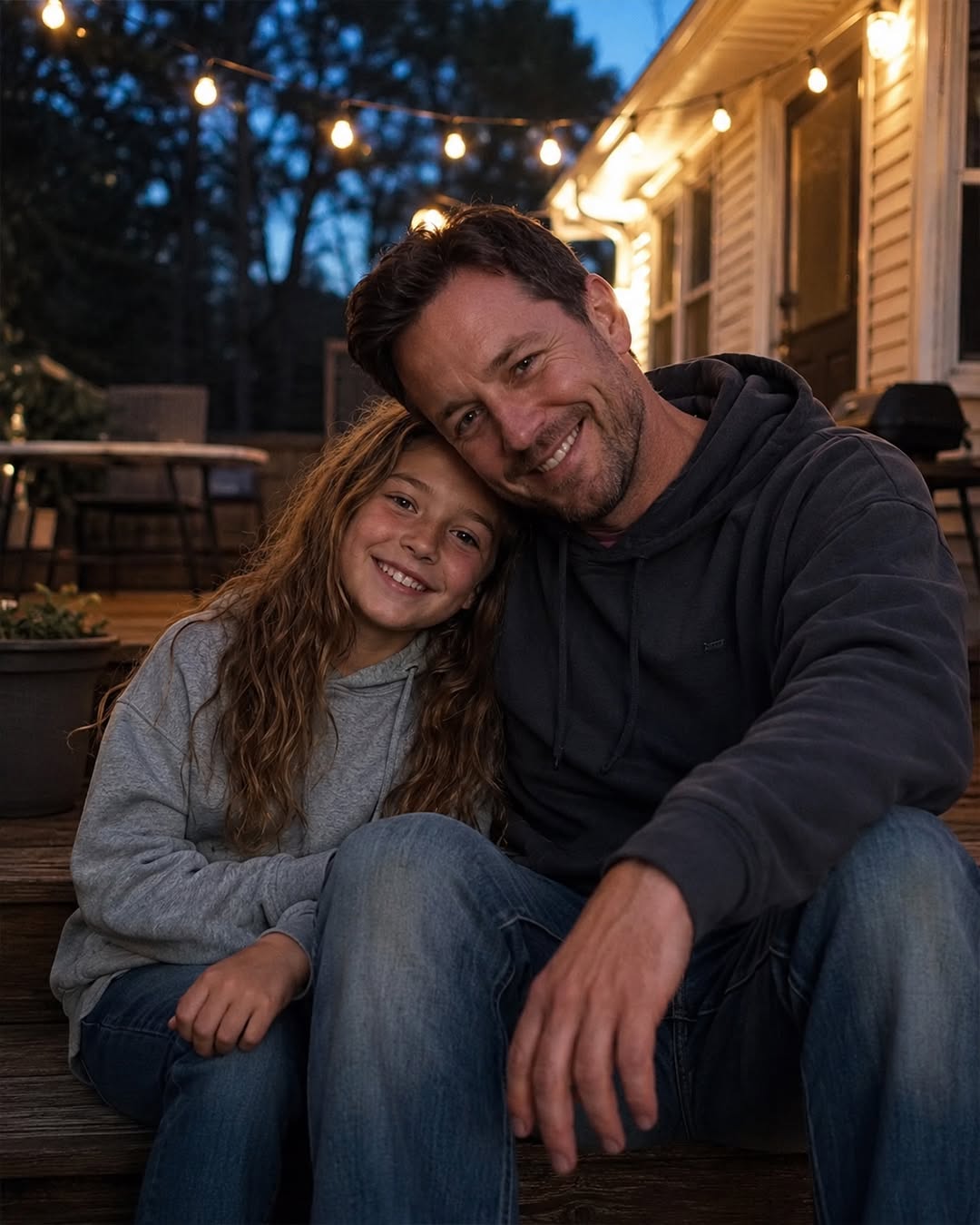
Ellie miała osiem lat, długie kończyny i ostrożne uśmiechy, z piwnymi oczami tak podobnymi do jej matki, że czasem musiałem odwrócić wzrok, zanim żałoba pojawiła się publicznie. Oczy Leah. Cierpliwość Leah. Nawyk Leah, by wszystkim było wygodnie, nawet gdy pokój na to nie zasługiwał.
Moja żona była nieobecna trzy lata. Rak powoli ją zabrał, a potem nagle. W szpitalu, gdy jej dłoń była mała i zimna w mojej, kazała mi obiecać coś, czego nie chciałam obiecać: "Opiekuj się moją matką," szepnęła.
Więc tak zrobiłem. W każdą niedzielę woziłam Ellie dwadzieścia minut do domu Barbary w Crestwood w Karolinie Północnej. W każdą niedzielę siadałem przy tym stole i połykałem przegotowane jedzenie, ostre uwagi i uczucie, że żona zostawiła mi obowiązek, na który Barbara nie zasługiwała.
Barbara Hutchkins siedziała na czele stołu niczym sędzia. Siwe włosy spięte mocno. Usta mocniej. Jej dobra porcelana była ułożona wokół nas, z wyblakłymi różowymi różami na brzegach. Naprzeciwko mnie siedział młodszy brat Leah, Tom, jedząc, jakby dyskomfort był czymś, co mógłby przeżyć. Jego żona Jennifer ledwo tknęła sałatkę i unikała wzroku wszystkich. Taka była rutyna. Nikt nie wyzwał Barbary. Nikt nie chciał dymu.
Ellie szturchnęła widelcem ziemniaki. Jennifer próbowała wypełnić ciszę. "Jak idzie w szkole, Ellie?"
"Jest dobre," powiedziała cicho Ellie. "Uczymy się ułamków."
"To wspaniale," powiedziała Jennifer, już zerkając z powrotem na telefon.
Wtedy odezwała się Barbara. "Twoi kuzyni byli tu w zeszły weekend." Poczułem, jak coś we mnie się zaciska, zanim jeszcze dokończyła zdanie. "Emily i Rachel," kontynuowała Barbara, kiwając głową w stronę Toma i Jennifer. "Takie piękne dziewczyny. Emily już wygrała dwa konkursy piękności w tym roku."
Widelec Ellie zwolnił. "To miłe," powiedziałem spokojnie.
"I mądra też," powiedziała Barbara. "Emily czyta na poziomie szóstej klasy. Rachel gra na pianinie pięknie."
"Ellie świetnie radzi sobie w szkole," powiedziałem. "Jej nauczycielka mówi, że jest jedną z najlepszych uczennic w klasie."
Barbara machnęła ręką. "Och, jestem pewien, że się stara."
W pokoju zapadła cisza. Tom odchrząknął. Jennifer wpatrywała się w szklankę wody, jakby miała się otworzyć i ją pochłonąć. Patrzyłam, jak moja córka kurczy się na krześle. Jej ramiona zgięły się do środka. Jej wzrok opadł na talerz.
"Nie jest tak ładna jak jej kuzynki," powiedziała Barbara. Na płasko. Na luzie. Jakby komentowała pogodę. "Niektóre dzieci to po prostu rozczarowania."
Ellie stopped breathing. I saw it. That tiny second where her chest froze and her face went blank because the words had gone somewhere too deep for an eight-year-old to handle. Something in me cracked. Not broke. I had broken when Leah died. This was different. This was the last thread of patience snapping clean.
I lifted my head and looked at Barbara. Really looked at her. At the woman whose car payment I had been making every month. The woman whose supplemental health insurance came from my checking account. The woman whose knee surgery bills I had covered. The woman who called me whenever she needed “a little help” and then sat across from my daughter and called her a disappointment.
I smiled. It was not a kind smile. It was the smile I used in business meetings when someone was about to lose something and did not know it yet.
“Keep talking, Barbara,” I said calmly. “You’ve got about three hours left to run your mouth.”
Tom laughed nervously. “Derek, come on, man.”
“Three hours,” I repeated.
Barbara narrowed her eyes. “What is that supposed to mean?”
I did not answer her. I reached over and placed my hand gently on Ellie’s shoulder. “Finish your dinner, sweetheart. We’re leaving soon.”
Barbara scoffed. “I’m just being honest. The girl needs to know.”
“Her name,” I said, my voice lower now, “is Ellie. And you just called my daughter a disappointment to her face.”
“Oh, for heaven’s sake.”
I stood. The chair scraped across the linoleum, loud in the sudden silence. “Come on, Ellie. I’ll get your jacket.”
Ellie slid from her chair immediately, like she had been waiting for permission to escape. Barbara’s voice followed us. “You’re being ridiculous.”
I took my keys from my pocket. “No,” I said. “I’m being three years late.”
At the door, I looked back one last time. “You have enjoyed a life I’ve been paying for because Leah asked me to take care of you. But Leah never heard you speak to our daughter like that.”
Barbara’s face flickered. For the first time all night, she looked uncertain. I opened the door. “Three hours,” I said again. Then I walked out with my daughter.
On the drive home, Ellie pretended to sleep. I let her. Halfway back, she opened her eyes and asked the question that nearly broke me. “Daddy, am I pretty?”
I pulled into the empty parking lot of a closed grocery store, unbuckled, and turned around. “Look at me, Ell.” Her eyes were full. “You are beautiful. You are smart. You are kind. You are everything your mom and I ever hoped for. Anyone who says otherwise is wrong.”
“But Grandma said—”
“Grandma is a bitter, unhappy person who throws her misery at other people. That is not about you.”
Then she asked if we were going back next Sunday. “No,” I said. “Not ever.”
Monday morning, I cancelled everything. Barbara’s car payment. Her supplemental insurance. The payment plan for her knee surgery. The monthly “help” transfer. Three years of financial support ended in thirty minutes. Then I texted her: Going forward, you’ll need to handle your own finances. My responsibility is to Ellie, not you. Don’t contact me again.
She called from eleven different numbers before noon. I ignored every one.
Two weeks later, she showed up on my porch in a borrowed-looking pantsuit, crying about bills, responsibility, and how Leah would be ashamed of me. Then her real face came out. She said I was unstable. She said Ellie needed “a better home.” She said a judge might agree.
That was when I called Dana Harland, the best family attorney I knew. Because Barbara did not just want her money back. She wanted leverage.
Dana Harland’s office was on the second floor of a brick building downtown, above a coffee shop that always smelled better than the coffee tasted. She was in her mid-forties, with short dark hair, sharp eyes, and the calm posture of someone who had listened to people panic for a living and never once joined them.
“Tell me everything,” she said.
So I did. The dinner. The insult. Three years of financial support. The car payment. The health insurance. The surgery bills. The money transfers. Barbara showing up on my porch, crying first, then threatening custody when crying did not work.
Dana listened without interrupting. When I finished, she tapped her pen once against the legal pad. “How serious do you think she is?”
“Very.”
“Then we treat her as serious.”
She explained what Barbara would probably do. File a petition. Claim I was unstable. Claim she was a better home for Ellie. Claim grief had made me emotional and unfit.
“She’ll try to turn your boundary into evidence of aggression,” Dana said. “So from this moment forward, you do not engage. No texts. No calls. No porch conversations. Everything goes through me.”
“Understood.”
“Now tell me you have records.”
For the first time that week, I felt something like confidence. “I kept everything.”
Dana’s expression changed. “Everything?”
“Bank statements. Cancelled checks. Insurance confirmations. Medical payment receipts. Texts where she asked for money. Proof of every car payment.”
Dana smiled slightly. “Good. Then she picked the wrong father to lie about.”
The petition arrived five days later. A manila envelope left on my doorstep. Emergency custody. Barbara Hutchkins versus Derek Wyatt.
I stood in my kitchen while Ellie was at school and read every lie. Emotionally unfit. Financially irresponsible. Unstable housing. Erratic and threatening behavior. Unsafe environment. Barbara wanted temporary custody while the case proceeded.
For a moment, I felt real fear. Not because any of it was true. Because courts are places where lies become dangerous if they arrive wearing formal language.
Dana came over an hour later with a briefcase and a grim face. “This is aggressive,” she said, spreading the petition across my table. “But aggressive does not mean strong.”
We went point by point. My income. My mortgage history. Ellie’s school records. Medical records. Teacher letters. Pediatrician letters. References from neighbors. A folder of photos showing birthdays, soccer games, school events, field trips, spelling certificates, and the normal, steady life Barbara was trying to erase with accusations.
Dana built it all into a binder. Color-coded tabs. Financial support. Parenting records. Medical stability. School involvement. Character witnesses. Barbara’s dependency on my money. “This,” Dana said, holding the binder up, “is how we win.”
The preliminary hearing was at the Crestwood County Courthouse. Barbara arrived in a gray dress and pearl earrings, looking like someone’s fragile grandmother. Her attorney, Roger Pruitt, argued that I was volatile and that Barbara had been a “stabilizing force” in Ellie’s life.
I sat very still. Dana had told me not to react. So I did not.
When Barbara testified, she said I threatened her. “He told me I had three hours to run my mouth,” she said, voice shaking. “I was afraid.”
Dana stood. “Context, Your Honor. Mrs. Hutchkins said this after calling Mr. Wyatt’s eight-year-old daughter a disappointment.”
Judge Patricia Moreno looked over her glasses. “Mrs. Hutchkins, did you say that?”
Barbara’s face tightened. “It was taken out of context.”
“What context makes that acceptable?”
Barbara had no answer that helped her.
Then came the money. Barbara’s attorney tried to suggest she had been helping me. Dana slid the bank statements across the table. Three years. Highlighted. Car payments. Insurance. Medical bills. Transfers.
Judge Moreno reviewed them in silence. “Mrs. Hutchkins,” she said finally, “these records show Mr. Wyatt has been supporting you.”
Barbara swallowed. “He wanted to help.”
“And yet you are claiming you are financially better equipped to care for the child than the man paying your bills.”
Silence. That was the first crack. The judge denied emergency custody. Ellie stayed with me. But she ordered a full hearing three weeks later because the allegations were serious enough to review.
I should have felt relief. I did, for about thirty seconds. Then Barbara filed a complaint with Child Protective Services (CPS). She claimed I left Ellie alone. Claimed I yelled constantly. Claimed Ellie was afraid of me.
Dana called me immediately. “Do not panic. They are required to investigate. Be honest. Let them see your home. Let them speak to Ellie.”
That night, I cleaned until my hands hurt. Not because the house was dirty. Because fear needs something to do.
The next afternoon, a caseworker named Linda Morrison arrived at four o’clock sharp. Tired eyes. Worn leather bag. Professional kindness. She walked through our living room, looked at the photographs on the walls, Ellie’s school backpack by the door, the little lavender bedroom with drawings taped crookedly along one wall.
Then she sat at my kitchen table. “I received a report,” she said. “I need to ask some questions.”
I answered every one. My work schedule. School pickup. Childcare. Meals. Doctors. Neighbors. Emergency contacts.
Then Linda spoke to Ellie in the living room. I sat where Ellie could see me, but not close enough to coach.
“Do you feel safe at home?” Linda asked.
“Yes.”
“Does your dad take good care of you?”
“Yes.”
“Does he ever hurt you?”