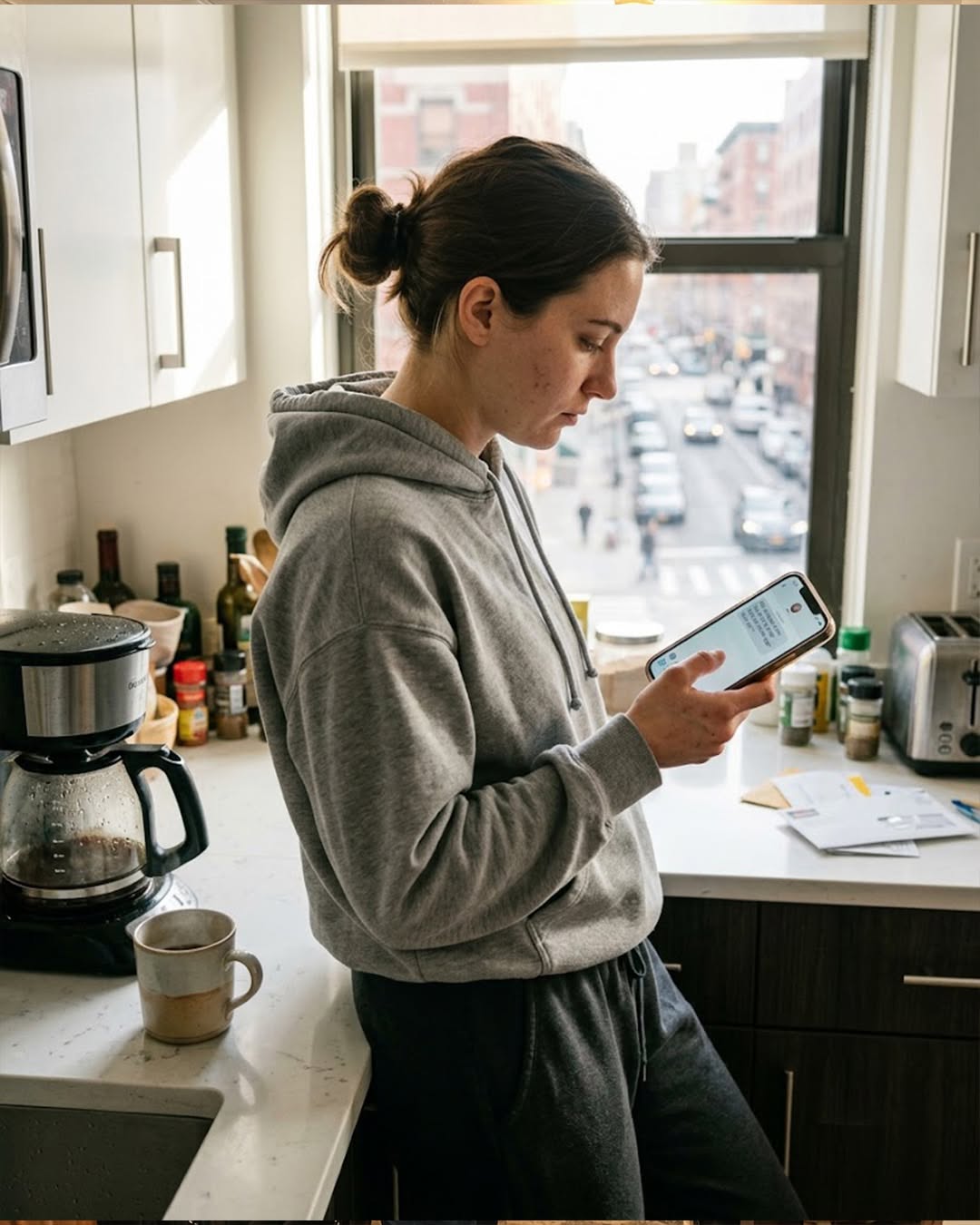
O 8:14 rano mój telefon rozświetlił się na kuchennym blacie, wibrując na marmurze, jakby miał coś pilnego do wyznania.
Jedna wiadomość od mojej mamy.
Perfekcyjna interpunkcja.
Idealny ton.
Mechaniczne.
"Wymieniliśmy wszystkie zamki w drzwiach wejściowych i kod bramy. Już ci nie ufamy."
Przez chwilę po prostu się w niego wpatrywałam.
Kawa wciąż kapała do dzbanka, para unosiła się nad kubkiem, którego jeszcze nie dotknąłem. Za oknem mojego mieszkania miasto ciągle się poruszało, jakby jedna rodzina nie wypowiedziała wojny jednym SMS-em.
Potem odpisałem, spokojny jak zawsze.
"Zanotowane. To było sprytne, ale chyba zapomniałeś o jednej rzeczy."
Wyśliłem i zobaczyłem, jak mała bańka znika.
Kiedy ludzie mówią rodzina na pierwszym miejscu, kiwałam głową automatycznie, jakby lojalność była pamięcią mięśniową. Wierzyłem, że jeśli dasz wystarczająco dużo, będziesz milczący i szybko wybaczysz, ludzie o podobnym nazwisku w końcu zauważą koszty.
Przez cztery lata płaciłem im kredyt hipoteczny, podatki od nieruchomości, media, naprawy dachu, a nawet nowy podgrzewacz wody po zeszłorocznej burzy. Każdy rachunek przychodził do mnie. Każde podziękowanie poszło gdzie indziej.
Mama mówiła: "Jesteś takim błogosławieństwem, Lisa," tym wyuczonym tonem, który brzmiał jak składanie paragonu, a nie jak wdzięczność.
Z zewnątrz moja rodzina wyglądała jak na zdjęciu.
Dom Carsonów stał przy cichej, podmiejskiej ulicy z białymi balustradami werandy, uchwytem na flagę przy drzwiach wejściowych, przyciętymi żywopłotami i szyldem "Home Sweet Home", który delikatnie kołysał się, gdy wiatr przechodził.
Moja mama organizowała tam niedzielne brunche i publikowała zdjęcia o miłości, wierze i jedności rodzinnej. W środku wszystko było transakcyjne.
Jeśli Lindsay, moja starsza siostra, potrzebowała pieniędzy z przedszkola, to była to Lisa.
"To ty jesteś odpowiedzialny."
Jeśli karta kredytowa taty była maksymalnie wykorzystana, to była Lisa.
"Wiesz, jak ciężko pracuje."
Jeśli mama chciała przemalować ganek przed Świętem Dziękczynienia, to była to Lisa.
"Ludzie zauważają takie rzeczy, kochanie."
Ale kiedy o coś prosiłem—weekend dla siebie, granicę, paragon, jedną szczerą rozmowę—nazywali mnie zimnym. Niewdzięczny. Trudne.
Lindsay miała dwoje dzieci i pełnoetatowy talent do zamieniania niedogodności w nagłe wypadki.
Jej samochód się zepsuł.
"Niebezpieczne dla dzieci."
Her card got hacked.
“Just until payday.”
The problem was that payday never seemed to come. Every time I bailed her out, Mom framed it as love.
“Family helps family.”
The unspoken line was always, “And you’ll pay for it.”
Dad was the kind of man who believed silence fixed everything. He avoided conflict like it was contagious, cracking jokes whenever tension filled a room.
“Hey, Liss,” he would laugh. “At least you’re not broke, right?”
Once, he used my name on a small loan application and called it “a paperwork mix-up.” I let it go, like I always did.
In our family, the peacekeeper did not win arguments. She absorbed them.
The house itself had become a shrine to that dynamic. I would visit and see the curtains I paid for, the roof I replaced, the appliances I covered, the yard I still mowed because nobody else remembered until neighbors started looking.
My mother would pour tea and remind me how blessed we were that Lindsay had found such a beautiful home for the family.
I never corrected her. I just smiled, my throat tight, pretending I did not notice she used the word “we” as if I was not sitting right there.
Some nights, I lay awake in my apartment staring at the ceiling fan, replaying every favor I had said yes to. It started as kindness and turned into a system. One where love was measured in payments made on time.
Somewhere along the way, I stopped being the daughter and became the donor.
So when that message came—“We no longer trust you”—it did not feel like betrayal. It felt like confirmation.
They had finally put in writing what had been true for years. The locks were changed, but the door had been closing long before that.
It started with a Facebook post I was not supposed to see.
I was waiting curbside for a grocery pickup when the algorithm handed me a little betrayal wrapped in family pride.
There they were: Mom, Dad, and Lindsay standing on the porch of the house I had been paying for four years. Mom wore her pearl earrings. Dad had one arm around Lindsay’s shoulders. Lindsay held her youngest child on her hip, smiling like a woman receiving something she had earned.
Mom’s caption read:
“So proud of our daughter Lindsay for building a home we can all share. It’s finally in the right hands.”
I read it three times, hoping my name might appear somewhere. Maybe in the comments. It did not.
Just a stream of hearts from relatives who never called me unless someone needed something.
“She’s such a good daughter.”
“What a blessing.”
“Elizabeth, you raised her right.”
My throat burned, and the grocery clerk’s voice barely reached me through the window.
“Ma’am, your order’s ready.”
I could not move.
Later, I called the bank, part logic, part denial.
The woman on the line was polite at first, almost cheerful.
“Yes, Ms. Carson, you are still listed as the primary responsible party on the mortgage.”
Then her tone shifted.
“There was a request last week to update certain records in favor of a Miss Lindsay Carson. Verification is still pending.”
My stomach dropped. Someone had tried to rewrite responsibility and ownership like it was a name tag.
By the time I checked my account, the damage was quiet but obvious. Two thousand four hundred dollars had transferred out to a familiar card. Lindsay’s emergency Visa.
I texted her.
“Did you use my card again?”
Ten minutes later, she replied.
“Don’t make it a thing, Lisa. The kids needed shoes. I just used the joint account information you forgot to remove me from last year. We’re still sharing that one, right?”
We were not.
Then Mom chimed in.
“Honey, Lindsay’s going through so much. She’ll pay you back. Let’s not start a war over a few dollars.”
A few dollars.
I stared at the screen, my hands shaking—not from rage, but from recognition. It had never been about money. It was about value. Their emergencies always outweighed my boundaries.
That night, a notification blinked on my phone. Family Circle group chat.
I had not opened that chat in months, but curiosity is a cruel thing. Inside, someone had posted a meme of a man handing over his wallet.
The caption read, “Big sponsor energy.”
A cousin tagged me. Another replied, “Can we get you to fund my loans next?”
Dad joined in with a joke.
“Only if you name your next cat after the bank.”
No one said it was cruel. No one defended me.
I left the chat. They added me back with balloon emojis. I left again and blocked everyone.
It should have felt childish. Instead, it felt like air.
A week later, I stopped by the house to mow the backyard. Old habit. The kind of habit that survives long after love has been replaced by obligation.
Halfway through the yard, I heard laughter from the kitchen window. Lindsay’s voice floated out, bright and easy.
“Did you see her face when Aunt Karen asked about the deed? She looked like a guest.”
Mom laughed too, that low, satisfied tone she used when she thought she had already won.
“Once the paperwork clears, there’s nothing she can say. She insisted on keeping the mortgage responsibility in her name. Her problem now.”
Then Lindsay, sharper.
“She’s always been distant anyway. A guest with a wallet.”
And Mom finished it.
“She’s not family anymore. She’s just a sponsor.”
The hose slipped from my hand. Water spilled over my shoes, but I did not move. I did not cry either. Something inside me turned still, like water freezing mid-pour.
I did not go inside that day. I turned off the mower, left it right there in the yard, and drove home with the windows down, letting the wind dry whatever was left of the sting.
By the time I reached my apartment, I knew exactly what I had to do.
The house was not mine anymore. Not emotionally. Not in the way a home should be. But the payments were mine. The proof was mine. And proof, unlike family loyalty, did not change its story when the room got uncomfortable.
I sat at my kitchen table, the same place where I had read Mom’s message days earlier. The coffee stain from that morning was still faintly visible on the counter, like a watermark on a document.
I opened my laptop, logged into my bank account, and hovered over the auto-transfer that read: $4,800 recurring monthly payment.
The cursor blinked. My hand did not tremble.
Cancel.
The confirmation screen flashed once. That was it. Four years of silence, undone in a single click.
I leaned back in my chair, a strange calm settling over me. Not victory. Clarity.
I opened a new spreadsheet and started typing.
Mortgage.
Property tax.
Roof repairs.
Utilities.
Insurance.
Daycare.
Groceries.
Emergency transfers.
Each entry got a date, an amount, and a short note. Line after line, four years of transactions came alive again, like ghosts I was finally calling by name.
When I finished, the total stared back at me: $211,723.84.
My breath caught. Not from regret. From validation.
I printed every page and slid them into a binder. Then, for the first time in years, I labeled something for myself: Evidence.
That night, a soft thud at my apartment door pulled me from the numbers. A white envelope with gold edges. No return address.
Inside was a glossy invitation.
Please join us to celebrate Elizabeth Carson’s 60th birthday.
The quote at the bottom read: “A house is not a home without family.”
I almost laughed. The irony was so loud it became quiet. I pinned the invitation to my fridge, right beside the binder of payments. A reminder that every story needs an ending.
For the next few nights, I barely slept. I was not angry anymore. I was meticulous.
Each evening after work, I gathered receipts, screenshots, bank statements, text messages, and email confirmations. I found old photos of the roof repair, the water heater invoice, the insurance documents, and the transfer receipts with Lindsay’s name attached.
Then I found the voice memo from the afternoon in the backyard. My phone had been recording from my pocket. I did not even remember tapping the button.
The line played back crisp and cruel: “She’s not family anymore. She’s just a sponsor.”
Hearing it again did not break me. It focused me. That sentence had been the final transaction.
They defined me as a sponsor. Fine. Sponsors can cancel. Sponsors can audit.
I texted my grandfather that night.
“I’m going to Mom’s party. I think it’s time things are said out loud.”
No reply came, but I knew he had read it. He always did. He was the only one who never asked for money. Never treated kindness like a down payment. Never called me “responsible” when what he meant was “available.”
The day before the party, I rehearsed. Not words. Composure.
I stood in front of my mirror wearing a navy blazer, dark jeans, and low heels. My hair was tied back. Nothing flashy. Nothing fragile.
Calm. Capable. Unshakable. That was the point. They thrived on my reactions. This time, they would get none.
Before heading to bed, I packed the binder and a USB drive with every file neatly labeled. I zipped them into a plain black bag and set it by the door.
The weight of it was not heavy. It was balance.
When morning came, I poured coffee, glanced at the invitation one last time, and whispered to myself, “That was clever.”
Then I looked toward the black bag by the door. “But you forgot one thing.”
I smiled, locked my apartment, and left for the party.
The banquet hall was exactly what I expected. Emerald and gold decorations. A rented room that smelled faintly of perfume, champagne, and polished wood. Soft string lights glowing against cream-colored walls.
A gift table covered in metallic wrapping paper. A framed photo of the Carson house displayed near the stage, with a small American flag standing beside it as if patriotism could make a family look honest.
My mother had always known how to make an event feel like a performance. Tonight, she was the star.
I walked in ten minutes late on purpose.
The chatter dimmed when people noticed me, like someone had lowered the volume knob. A few polite smiles flickered, unsure whether to greet me or avoid me.
Lindsay froze mid-sentence near the punch bowl, then looked away so quickly it was almost convincing. Dad saw me and immediately studied the ice in his glass. Mom’s smile held, but barely.
I found an empty chair near the back. No one approached. Perfect. I wanted distance. Not to hide. To watch.
From there, I could see everything. The slideshow of Mom’s life looping on the projector. The “Happy 60th, Elizabeth” banner strung across the wall. The pile of shiny gift boxes near the stage. The relatives who had laughed at the sponsor jokes now avoiding my eyes.
The lights dimmed, and the MC, a family friend who loved his own voice, tapped the microphone.
“Let’s all raise a glass to Elizabeth Carson,” he said. “A woman of grace, generosity, and love.”
Laughter and applause rippled through the room like a rehearsed cue. I sipped my water and tasted the irony.
The slideshow rolled again. Wedding photos. Vacations. Baby pictures of Lindsay and me. Then recent photos of the house. The porch. The dining room. The backyard.
Not one image showed the invoices. Not one showed me standing in the cold while a contractor explained how much replacing the roof would cost. Not one showed me opening my banking app at midnight after Lindsay sent another emergency text.
Mom stepped onto the stage in a deep green dress and pearl earrings. She looked elegant. She always did. Her gift was making control look like grace.
Her voice warmed the microphone.
“This home was built with love and passed down with purpose,” she said. “It is a legacy, a reminder that family always comes first.”
People nodded. A few dabbed their eyes.
Then Lindsay took the microphone.
“Mom,” she said, voice trembling just enough to sound heartfelt, “you taught us what real family means. Sacrifice. Loyalty. Faith. This house represents that. It’s the heart of who we are.”
Applause erupted. Cell phones lifted. Flash bulbs lit the room.
I felt my pulse slow, not speed up. The louder they clapped, the clearer I became.
Mom dabbed at her eyes with a napkin.
“I’m so proud of my daughter,” she said, smiling toward Lindsay. “She has shown us what legacy truly means, and I’m grateful this home will stay in the right hands.”
The right hands. The same phrase from the Facebook post. The same phrase that had burned through me in the grocery pickup lane.
I stood. The applause faded just enough for the microphone to catch my footsteps. I did not rush. I walked up the aisle like someone who belonged there. Because I did.
“I wasn’t planning to speak tonight,” I said, picking up the spare microphone from the stand. My voice came out even, amplified across the room. “But since we’re talking about legacy, maybe we should talk about what it costs.”
A ripple of whispers moved through the tables. Mom’s smile twitched.
“Lisa,” she said softly, that warning tone she used when she wanted me to shut up without saying it out loud. “Maybe we can do this another time.”
“I think now works,” I said. I reached into my bag and held up the USB drive. “Could someone plug this in for me?”
A cousin near the laptop hesitated. He looked at Mom. Then at Lindsay. Then at me.
Curiosity won. He took the USB and slotted it into the laptop.
The screen behind my mother flickered. The slideshow disappeared. For one second, the room went silent except for the hum of the projector.
Then the first audio file began to play. Background wind. A mower in the distance. Lindsay’s laugh. Then my mother’s voice, clear and cold.
“She’s not family anymore. She’s just a sponsor.”
The words hit the air like glass cracking across a silent room. Someone gasped. A fork clattered onto a plate.
Moja mama zbladła. Lindsay zesztywniała obok niej, usta rozchyliły się, jakby mogła zaprzeczyć dźwiękowi własnej kuchni.
Nie spojrzałem na żadną z nich. Kliknąłem do następnego pliku.
Projektor rozświetlił się zrzutem ekranu czatu grupowego Family Circle. Mem. Komentarze.
"Energia dużego sponsora."
"Możesz sfinansować moje pożyczki następne?"
"Zadbaj o zadowolenie dawcy."
Śmiech, który wypełniał salę przez godzinę, zniknął.
Kolejne kliknięcie. Pojawił się arkusz kalkulacyjny. Rzędy i rzędy płatności. Każda linia datowana i oznaczona. Hipoteka. Podatek od nieruchomości. Naprawa dachu. Media. Żłobek. Transporty awaryjne. Ubezpieczenie. Zakupy.
Na dole na ekranie świeciła suma: 211 723,84 USD.
"To," powiedziałem cicho, "jest ceną twojego dziedzictwa."
Nikt się nie ruszył. Odwróciłem się lekko, pozwalając pokojowi wyraźnie zobaczyć ekran.
"Każda rata kredytu hipotecznego. Każda nagła sytuacja. Każdy rachunek pokrywałem, a ty nazywałeś mnie rodziną, tylko wtedy, gdy było to wygodne."
Mama w końcu odzyskała głos.
"To był prezent, Lisa. Rodziny sobie nawzajem pomagają."
Spotkałem jej wzrok.
"Nie. Rodziny dziękują sobie nawzajem. Prezenty przychodzą z wdzięcznością, a nie z oszustwem."
Tata wstał z krzesła, twarz miał czerwoną, głos drżał ze złości.
"Nie przychodzisz tu i nie zawstydzasz matki przy wszystkich."
Odwróciłem się w jego stronę.
"Masz na myśli to, że użyłeś mojego nazwiska w tej kredencie bankowej bez pytania? Bo wciąż mam papiery. Mam też to pokazać?"
Zamarł. Jego usta otworzyły się, zamknęły, a potem zamknęły całkowicie. Powoli usiadł z powrotem.
Lindsay zrobiła krok naprzód, twarz zarumieniona.
"Wyolbrzymiasz to. Po prostu—"
"Redefinicja własności?" Skończyłem dla niej.
Jej szczęka się zacisnęła. "Zawsze myślisz, że jesteś lepszy od wszystkich."
"Nie sądzę," powiedziałem. "Myślę, że w końcu widzę wszystkich wyraźnie."
W pokoju zapanowała całkowita cisza. Nawet dzieci przy stole z deserami milczały. Słyszałem cichy brzęczenie świateł nad głową.
Wtedy rozległ się dźwięk z tyłu sali.
Stuk. Stuk. Stuk.
Drzwi się otworzyły, a mój dziadek wszedł do środka, opierając się o laskę. Rozmowy przechodziły w oszołomione szepty. Nie uczestniczył w żadnym rodzinnym wydarzeniu od lat.
Powoli szedł wzdłuż przejścia, ignorując każdą twarz, która się na niego odwracała. Jego obecność wypełniła pokój, nie podnosząc głosu. Gdy dotarł na scenę, zatrzymał się obok mnie. Linie na jego twarzy wyglądały na wyrzeźbione z determinacji.
Odebrał mi mikrofon z ręki i najpierw zwrócił się do mojej mamy.
"Elizabeth," powiedział cicho, "zrobiłaś nieuczciwy bałagan z hojnej córki."
Potem spojrzał na mojego ojca.
"A ty stałaś z boku, bo cisza była łatwiejsza."
W pokoju wstrzymał się wspólny oddech. W końcu stanął naprzeciw mnie.
"Lisa, przeczytałem twoją wiadomość. Miałeś rację, że się postawiłeś."
Ręka mamy powędrowała na pierś. Oczy Lindsay rozszerzyły się.
Dziadek kontynuował, głosem spokojnym i zdecydowanym.
"W zeszłym tygodniu przeglądałem rodzinny fundusz powierniczy. Zmieniłem to."
Pokój się zmienił. Nie głośno. Jeszcze nie. Ale coś przechodziło przez gości, stolik po stole, jak zapałka łapiąca papier.
"Imię Lindsay zniknęło," powiedział. "Nieruchomość i konta teraz należą do Lisy—tej, która zachowywała się jak rodzina, gdy wszyscy inni używali tylko tego słowa."
Cisza przerodziła się w westchnienia. Potem szepcze. Potem nastąpiła niska fala niedowierzania.
Twarz mojej mamy straciła kolor. Usta Lindsay opadły ze zdziwienia. Brak słów. Po prostu spanikować. Tata wpatrywał się w podłogę, jakby dywan nagle stał się fascynujący.
Mama sięgnęła za ramię dziadka, ale on się cofnął.
"Chciałaś dziedzictwa," powiedział. "To zasłuż na to. Oszustwo nie buduje rodzin. To ich opróżnia."
Oddał mi mikrofon. "Twoja kolej, dzieciaku."
Skinąłem głową raz. Moje ręce były pewne. Burza już minęła. Po prostu opowiadałem o szkodach.
Wyjęłam segregator z torby i zaniosłam go do stołu z prezentami. Ostrożnie położyłam ją między bukietem białych róż a pudełkiem owiniętym złotym papierem. Dźwięk, który wydał, był cichy. Ostateczne.
"Zmieniłaś zamki," powiedziałem. "Zmieniłem swoją przyszłość."
Nikt nie klaskał. Nikt się nie odważył.
Zeszłam ze sceny, każdy krok był przemyślany. Korytarz był cichy, poza projektorem wciąż brzęczącym za mną, arkuszem kalkulacyjnym zamarł na ekranie jak werdykt, którego nikt nie chciał czytać.
Gdy dotarłem do drzwi, głos mojej mamy przerwał ciszę. Mały. Błagając.
"Lisa, poczekaj. Nie rozumiesz."
"Doskonale rozumiem," odpowiedziałem. "To ty mnie nauczyłeś."
Potem wyszedłem. Nie ma ciasta. Bez tostów. Bez przeprosin. Tylko dźwięk skrobania krzeseł za mną i setki oczu podążających za mną do drzwi.
Na zewnątrz chłodne nocne powietrze uderzało mnie w twarz jak wolność.
Mój telefon zawibrował w torbie. Z drugiej strony. Z drugiej strony. Dziesiątki powiadomień. Nieodebrane połączenia. Wiadomości rozświetlają ekran. Mamo. Tato. Lindsay. . Kuzyni.
Ludzie, którzy milczeli, gdy mnie wyśmiewano, nagle mieli wiele do powiedzenia, gdy pokój usłyszał prawdę.
Nie spojrzałem. Po prostu szedłem dalej, pendrive wciąż ciepły w kieszeni. Po raz pierwszy nie byłam córką próbującą zasłużyć na miłość. To ja przestałam finansować własne złe traktowanie.
Rano moja skrzynka odbiorcza była polem bitwy. Jeden e-mail przyszedł z kancelarii prawnej z tematem wielkimi literami: PROPOZYCJA UGODY — PILNA.
Przejrzałem wiadomość. Chcieli rozwiązać "nieporozumienie" w sposób polubowny. Tłumaczenie: pieniądze na milczenie.
Odpisałem jedną linijkę.
"Pełna spłata w ciągu 72 godzin, albo dokumentacja trafi tam, gdzie trzeba."
Potem zamknąłem laptopa i nalałem sobie kolejną kawę.
Trzeciego dnia przelano pełną kwotę: 211 723,84 USD. Bez przeprosin. Bez wyjaśnienia. Tylko liczby. Język, którym zawsze mówili najlepiej.
Odpowiedziałem:
"Transakcja przyjęta. Nie potrzeba dalszego kontaktu."
I to było na tyle.
Po tym hałas ustał. Brak telefonów. Żadnych wiadomości. Bez udawanego zaniepokojenia. Po prostu cicho. Taki, który nie boli. Taki, który oddycha.
Tego popołudnia posprzątałem mieszkanie. Kupiłem stokrotki na targu i umieściłem je w niebieskim wazonie przy oknie. Przestawiłem regały z książkami. Wyrzuciłam stare koperty, stare paragony, stare przypomnienia o ludziach, którzy przekształcili moją dobroć w dział rozliczeń.
Kiedy mój telefon w końcu się zatrzymał, zrozumiałem, że spokój nie brzmi jak śpiew aniołów. Brzmi to jak nic, co wymaga twojej uwagi.
Tydzień później pojechałem do domu dziadka. Stał na ganku z herbatą w ręku, promienie słońca odbijały się od zmarszczek wokół jego oczu.
“They’re furious,” he said, smiling a little.
“Good,” I answered. “Maybe fury will make them think.”
He nodded. “Forgiveness requires accountability,” he said. “They haven’t earned it.”
I stayed until sunset. Neither of us spoke much. We did not need to.
When I got home, I found a small package left at my doorstep. Inside was a physical photograph of the old house—overgrown, empty-looking, with the porch wreath still hanging on the door.
Na odwrocie fizycznego zdjęcia, napisanego znajomym pismem mamy, widniały cztery słowa:
"Tęsknimy za tobą. Proszę, wróć do domu."
Patrzyłem na to długo. Następnie ostrożnie złożyłam papier i schowałam go do szuflady.
Dom to nie miejsce, gdzie jesteś zamknięty. Dom to miejsce, gdzie wreszcie możesz oddychać.
Wymienili zamki. Zmieniłem swoje życie.
Kiedyś myślałem, że pokój przyjdzie wraz z przebaczeniem. Teraz wiem, że to się dzieje z dystansem. Nie czekam na ich telefony. Nie sprawdzam skrzynki odbiorczej, licząc na wyrzuty sumienia. Już nie mylę dostępu z miłością.
Niektórzy uważają, że zerwanie więzi jest okrutne. Prawda jest taka, że to była najżyczliwsza decyzja, jaką kiedykolwiek dla siebie zrobiłem.
Kiedy się teraz budzę, nie ma żadnego napięcia w tle, które szumie pod dniem.
Tylko światło słoneczne.
Kawa.
Cisza.
To jest wolność. Nie dramatyzujące. Nie głośno. Tylko moje.
Zastrzeżenie: Ta historia jest dziełem fikcji stworzonym w celach rozrywkowych. Wszelkie podobieństwa do prawdziwych osób, wydarzeń czy miejsc są przypadkowe.