Dzieci mojej siostry wysłały mi świąteczną listę życzeń: drona za 3 200 dolarów, PS5 Pro, dwa iPhone'y i gotówkę na przyszłe tatuaże.
Zapytałem, czy to żart.
Ona odpowiedziała: "Nie bądź skąpy. Jesteś bogatym wujkiem."
Po prostu się uśmiechnąłem.
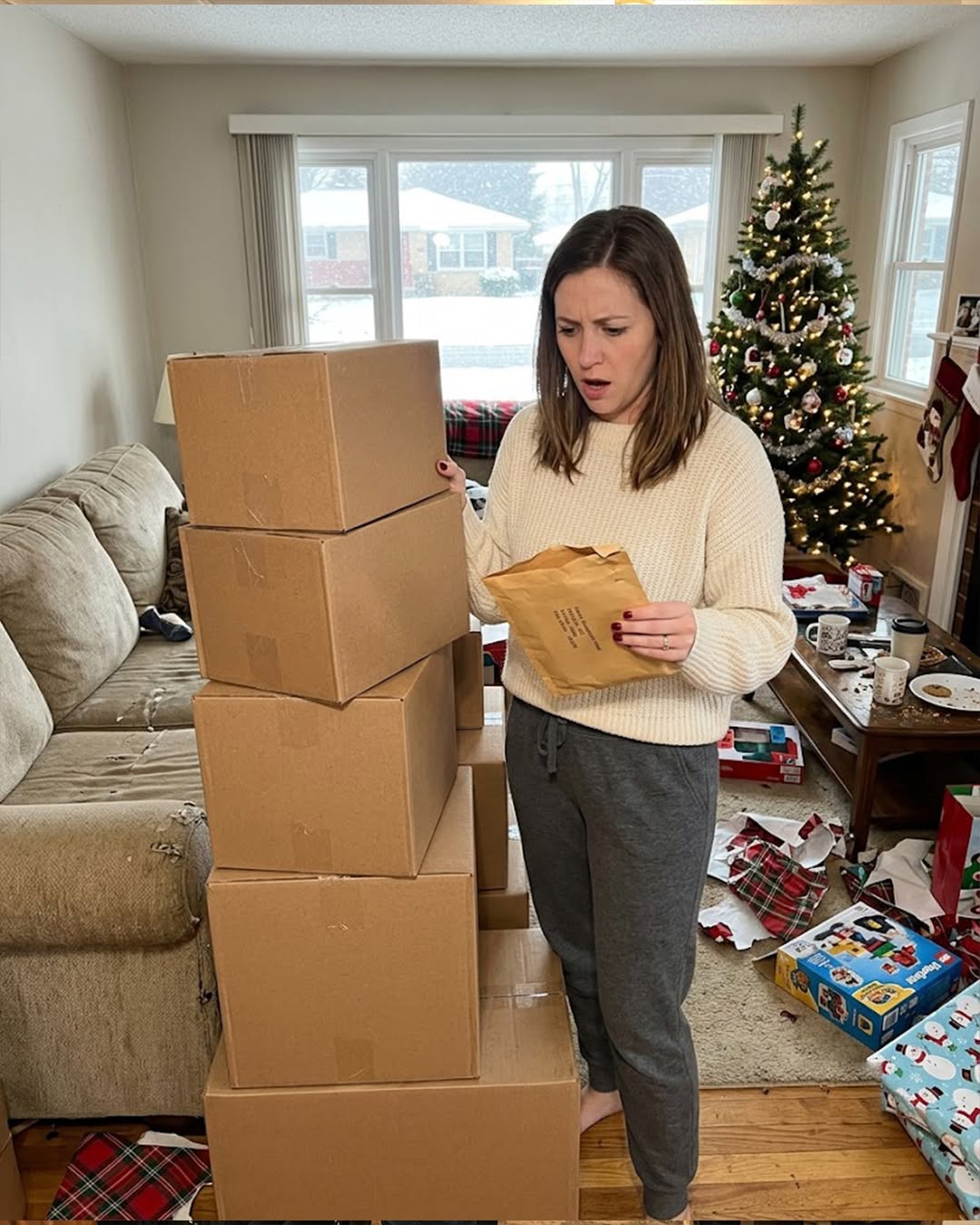
W poranek Bożego Narodzenia przyjechała ciężarówka z 12 ogromnymi pudłami. Przeprowadzkowie wręczyli mojej siostrze zapieczętowaną kopertę. To nie była kartka. To była instrukcja krok po kroku.
Dziesięć minut później dzieci wpatrywały się w te pudełka, jakby Boże Narodzenie nagle zamieniło się w lekcję matematyki.
Nazywam się Andrew Carter. Mam 34 lata, jestem lekarzem ratunkowym, a jeśli zapytasz moją rodzinę, to ja jestem tym stałym.
Pracuję na nocne zmiany. Piję złej kawy. Trzymam czystą parę fartuchów w bagażniku, bo wcześnie nauczyłem się, że życie nie wywołuje przyszłości, zanim się rozpadnie.
Jestem starszym bratem o trzy lata, cichym synem, tym, który odbiera telefon o 2:01 w nocy i mówi: "Już idę", nawet gdy właśnie skończyłem 12-godzinną zmianę i wciąż czuć lekki zapach szpitalnego środka dezynfekującego.
Gdybyś dorastał w moim domu, wiedziałbyś, że wszyscy mieliśmy role.
Mój był niezawodny.
Moja siostra Melissa była wolnym duchem o drogim guście. Mama nazywała to urokiem. Tata nazywał to fazą.
Ten okres trwał 19 lat i ciągle trwa.
Nie byliśmy bogaci. Byliśmy zwykłą amerykańską rodziną w zwykłym domu na dwóch poziomach pod Columbus w Ohio, z wąskim podjazdem, koszem do koszykówki lekko przechylonym w lewo i czujnikiem dymu, który zdawał się ćwierkać tylko wtedy, gdy wszyscy byli zbyt zmęczeni, by się nim zajmować.
Tata przedwcześnie zakończył karierę po kontuzji pleców. Mama rozciągała kupony, aż papier się podarł. Kupowaliśmy płatki sklepowe, naprawialiśmy rzeczy taśmą klejącą i traktowaliśmy wyjazd do Red Lobster jak królewskie wydarzenie.
Brałem zmiany na studiach medycznych i kilkakrotnie przelewałem pieniądze do domu. Wtedy nie czuło się to jak poświęcenie. Czuł się jak grawitacja. Nieuniknione. Nudne.
Ktoś musiał zapłacić rachunek za prąd. Ktoś musiał być dorosły. Tym kimś byłem ja.
Teraz wynajmuję mały dom szeregowy niedaleko szpitala, jeżdżę siedmioletnim sedanem z popękanym tylnym światłem i mam roślinę o imieniu Lucky, która nie chce umrzeć, prawdopodobnie z litości.
Moje wakacje to dwudniowe okna między zmianami grafików. W mojej lodówce zwykle są jajka, resztki chili i rząd pojemników na posiłki z etykietami z taśmą maskującą.
Patients know me as Doctor Carter. My coworkers call me Andrew. My family calls me whenever something goes wrong.
It started the week before Christmas.
I was charting at 10:03 a.m., trying to finish a discharge summary before my next patient rolled in, when my phone buzzed 20 times in a minute.
Group text.
Melissa’s kids, Tyler and Chloe, ages 14 and 11, had sent me a wish list.
Not a list. A manifesto.
“Hey, Uncle Andrew. Here’s our Christmas list so Mom doesn’t forget. A $3,200 drone, the one with cinematic mode, a PS5 Pro, two iPhones. We’ll trade our old ones in. Cash for future tattoos, lol. And some clothes. Size list attached. Thanks. Love you.”
I stared at the numbers. Then I read it again, counting zeros the way a nurse counts pills after a long shift.
I typed, “Is this a joke?” Then I set the phone face down on the desk.
It buzzed again. Melissa answered for them: “Don’t be cheap. You’re the rich uncle.”
I looked at the clock. 10:06 a.m.
Monitors beeped down the hall. Somewhere two rooms away, a child coughed hard enough to bring a nurse running. A Christmas wreath hung crooked on the nurses’ station, and the hospital coffee had been sitting on the burner long enough to taste like punishment.
I felt that old familiar pull to say nothing and just find a way.
I did not answer. I put my phone back in my pocket and went to check a blood pressure that would not stabilize.
Two days later, I was at my parents’ house dropping off soup and batteries because their smoke alarm had chirped for a week and everyone had somehow decided to live with it.
Melissa was there, perched at the kitchen table, scrolling on her phone. She had a cranberry manicure, a cream sweater, and the expression of someone who believed the world was slightly late delivering what she deserved.
She did not look up. “Did you see the list?” she asked.
“Yeah,” I said.
“You’re a doctor,” she said. “It’s not like you can’t afford it.”
Dad clinked his mug against the table and studied the placemat like there was a test printed on it. Mom cut an apple very carefully, one thin slice at a time.
All the small sounds felt loud. The knife against the cutting board. The refrigerator humming. The smoke alarm finally quiet above our heads because I had just changed the battery.
I did not argue. I did not explain billable hours, taxes, student loans, rent, malpractice insurance, or why I still made my own lunches in bulk because convenience cost more than discipline.
I just said, “I saw it.” Then I went to replace the second battery upstairs.
I wish I could say I forgot about it. I did not.
That night I went home and tried to sleep, but the sentence kept looping on my ceiling like a ticker: Don’t be cheap. You’re the rich uncle.
Here is what you need to know before Christmas morning. I was not born with a white coat. I earned it one slow, unglamorous shift at a time.
My first semester of medical school, I worked as a tech on weekends and cleaned an office three nights a week. I learned to nap in elevators, study in line at the pharmacy, and eat dinner from vending machines without calling it dinner out loud.
I missed birthdays, barbecues, and the entire concept of Sunday. When I finally matched, I cried alone in a parking lot behind the hospital. Then I wiped my face, went inside, and worked because my shift started at six.
When Dad’s back went out, I sent $300 a month.
When Mom’s car needed a new transmission, I put it on my card and paid it off in six months.
When Melissa’s rent was five days late because payroll had supposedly messed up, I transferred $850 with a note that said, “Pay me when you can.”
She never did. I never reminded her.
“You’re a good brother,” Mom would say, like it was a compliment and a request in the same sentence.
“Family looks out for each other,” Dad would add. Pointed but vague, which is how guilt usually sounds when it has had years to practice.
Melissa learned the rhythm. She would call and start with a story.
A landlord who had it out for single moms. A teacher who singled out Tyler. A school trip fee due by tomorrow.
Always tomorrow. Always urgent.
I would be in the emergency department washing stress and work from my hands, and Melissa would be crying quietly into the phone.
“It’s just, you know how it is, Drew. You’ve always been the strong one.”
Strong is a word people use when they mean useful.
The tally in my notes app read like a ledger I never meant to keep:
$300.
$850.
$120 for cleats.
$64 for a field trip.
$400 for a deposit.
$200 for a birthday emergency.
$1,100 for “we got behind.”
$75 for a fundraiser.
There were 47 entries over six years. The total made me lightheaded in a way caffeine could not fix.
But it was not just money. It was time.
Melissa did not drive on the freeway because she said people merged like they were trying to prove a point. So I drove to soccer practice, pediatric appointments, school meetings, and one last-minute orthodontist visit because she had forgotten the appointment until 18 minutes before it started.
I left mid-shift twice and used my lunch break to sit in a school office signing a form because Mom’s handwriting stressed the secretary out.
I watched two school musicals where Tyler had three lines and my name was not in the program. I clapped anyway.
I recorded Chloe singing “Jingle Bell Rock” on a stage in a church gym with bad lighting because Melissa’s phone was full.
I was fine with that. I just wanted them to be okay.
“Drew, can you look over this?” Melissa would slide me bills, letters, notices, school forms, insurance statements, and anything that had fine print.
“It’s all so confusing,” she would say. Then she would text a friend while I called customer service for her.
In our family, the golden-child thing worked backwards. Melissa’s mistakes became group projects. My wins disappeared into silence.
When I became chief resident, Dad shook my hand like he was meeting a neighbor. When Melissa got a job at a boutique for three weeks, we had cake.
Boundaries were optional until they were mine.
The first time I said no, it was about a car.
Melissa had traded in a perfectly fine sedan for a shiny SUV with a monthly payment that made me blink. Two months later, she called me.
“They’re threatening to take it,” she said. “I just need a bridge.”
“How much?” I asked.
“Only $1,100.”
Only. As if the word was not a flag on fire.
“I can’t,” I said.
Silence. Then she said, “Wow. Okay. I see how it is.”
Two hours later, Mom called. “Sweetie, your sister is crying.”
“I’m at work,” I said.
“We are all at work,” she replied, and I could hear the script turning pages. “You know she relies on you.”
“I know,” I said. “That’s part of the problem.”
It did not stop. It just changed shape.
Fewer direct requests for one-off payments. More assumptions that I would cover just this month. Just until the refund hit. Just until tax season. Just until things settled down.
Things never settled down. If I hesitated, I got the same line verbatim, copied and pasted by blood: “Don’t be petty. Family helps.”
There was also the nickname. It started as a joke from my cousin at Thanksgiving: “Doc Moneybags.”
Everyone laughed. It stuck. It became a handle, a tag on every conversation.
“Doc Moneybags is here.”
“Doc Moneybags can probably get it.”
“Ask Doc Moneybags.”
They meant it sweetly, or at least that was what they told themselves. I smiled. I brought pies. I left with less than I came with.
By December, I was tired in my bones. The kind of tired you cannot nap off.
Melissa’s wish list hit me on a night when a teenager had gone through a serious medical crisis and survived. I still had his mother’s voice echoing in my ears when I read, “cash for future tattoos.”
I was not offended by tattoos. I was offended by the math.
I typed, “Is this a joke?” Melissa answered with the sentence that finally gave a shape to my exhaustion: “Don’t be cheap. You’re the rich uncle.”
There is a quiet moment after an insult when you wonder if you imagined it. I did not. The message sat there, blue bubble and three dots, then nothing.
I put my phone away and went to check on a kid who was breathing, and I was grateful for that.
The next day at lunch, I called Melissa. “Hey,” I said.
“What’s up?” she answered, bright and casual.
“About the list.”
“It’s not that deep,” she said. “You always overthink.”
“I can’t buy all that.”
“You won’t or you can’t?” She said it like those were the only two settings I came with.
“I won’t,” I said.
She laughed. “Okay, principled. Get whatever. Just don’t make it weird.”
We hung up. I stared at the sandwich I did not want.
I thought about every small yes that had turned into an expectation with a bow on top. I thought about the kids. None of this was their fault. They were repeating what they heard. Rich uncle. Cheap. Don’t be weird.
I pulled out a sheet of paper and wrote a plan the way doctors write plans: clear steps, time frames, numbers, follow-up, expected outcomes.
Not revenge. Not a stunt. A boundary in writing.
I booked three things that afternoon:
A financial counselor for Melissa, prepaid for six sessions.
A family therapist, first three sessions covered.
Two days of movers with packing supplies—in case she chose to downsize to the apartment she had been talking about since July but had never actually called.
I also bought grocery gift cards that required attendance at the budgeting sessions to activate. Yes, I was that specific. I am a man who writes orders for a living.
Christmas morning, I brought nothing you could plug into a wall. I brought 12 large boxes and a sealed envelope.
We do brunch on Christmas at my parents’ house. Pajamas, waffles, bacon, orange juice in the good glasses, kids tearing paper like confetti cannons went off inside.
I arrived in scrubs under a sweater, with a bruised thumb and an envelope in my coat pocket. My plan was not to ruin the day. My plan was to stop the bleeding.
“Uncle Andrew!” Chloe shouted, running to me.
“Hey, kiddo,” I said, hugging her. She smelled like syrup and shampoo.
Tyler looked up from beside the tree, trying to act older than he was. Melissa stood by the tree, arms crossed.
“So,” she said, scanning behind me like I might be hiding a drone under my jacket.
Before I could answer, a truck pulled up outside. A big white truck with a company logo on the side.
Two movers came to the door with 12 giant boxes and dolly straps. Everyone froze like a sitcom paused for commercial.
“What is this?” Melissa said.
“Delivery for Melissa Carter,” one mover said, friendly and efficient.

He set the stack down by the couch. The boxes were plain cardboard, taped cleanly. No cheerful wrapping paper, no bows, no shiny promise.
My dad’s mouth opened. “Andrew,” he said slowly.
I handed Melissa the sealed envelope. She finally grabbed it, tore it open, and read. Her face went from confused to annoyed to something pale.
“What is this?” she said again, but smaller.
“It’s a plan,” I said.
She read out loud, voice flat at first:
“Step one, open the two smaller boxes inside. The grocery cards activate when the financial counselor marks attendance for session one.” Her eyes flicked to me. I said nothing.
“Step two, call the counselor, number listed, and book your first meeting this week.” Her mouth tightened.
“Step three, pack one box of donations with the kids. Choose toys and clothes they have outgrown. Label it, and we will take it together at 2:01 p.m.” Mom pressed a hand to her chest. Dad stared at the carpet.
“Step four, if you choose to downsize to the apartment you told me about in July, movers are scheduled for the 5th and 6th. If not, they will haul these empty boxes back.” Her voice was less sharp now. More cornered.
“Step five, family therapy intake, January 3rd, 10:00 a.m. It’s paid. Show up.”
She looked up at me like I had spoken another language.
“There’s also a budget,” I said quietly. “It’s yours, not mine. I’m not adding my card to your phone plan this time. I’m not paying your car note. I’m not buying iPhones. I’m not buying a drone.”
“You think we’re charity cases?” she snapped.
I shook my head. “I think you’re my sister and I love you. I also think I’ve been acting like an ATM with a stethoscope.”
The room went silent except for the cartoon on the TV that nobody was watching.
Tyler tore at the tape on one box and found the grocery cards and a plain note: “We’ll cook together this week. Menu on the back.”
He looked from the card to me, confused. “Where’s the PS5 Pro?”
“There isn’t one,” I said gently. “Not today.”
His lip trembled. Chloe started crying first. Then Tyler did, in that embarrassed teenage way where anger tries to cover disappointment and neither one works.
Melissa went dead still.
“Why would you do this on Christmas?” Mom whispered, like I had brought a storm inside the house.
"Bo nie chcę dalej uczyć dzieci, że miłość to wszystko," powiedziałem. "I nie chcę ciągle uczyć Melissy, że naprawię to, jeśli to zignoruje."
Tata wstał. "Synu, to jest... to już za dużo."
"Wiem," powiedziałem. "O to właśnie chodzi."
Szczęka Melissy się zacisnęła. "Karasz moje dzieci, żeby mi coś udowodnić."
"Nie," powiedziałem spokojnie. "Odmówię kupienia im stylu życia, którego nie mogę etycznie popierać."
"Jesteś lekarzem," powiedziała, jakby to był atut.
"Jestem człowiekiem," powiedziałem. "Zmęczony."
Chwyciła kopertę ponownie, przewracając strony. Był tam kalendarz, numery telefonów, prosty budżet z kategoriami, lista terminów oraz strona oznaczona "W czym mogę pomóc" i "Czego nie sfinansuję".
Przeprowadzkowie stali niezręcznie przy drzwiach. "Proszę pani," powiedział jeden z nich, "możemy zostawić to tutaj albo załadować z powrotem."
Nikt się nie ruszył. Chloe płakała głośniej. Tyler tupnął nogą i krzyknął, że jestem niemiła. Melissa spojrzała na mnie, szukając wersji mnie, która się podda. Nie zrobiłem tego.
"Otwórz ostatnie pudełko," powiedziałem.
"Nie," powiedziała.
Tata tak. W środku były trzy rzeczy:
Lista tanich programów sportowych w ich okolicy.
Wydruki dwóch ogłoszeń o pracę na pół etatu, które Melissa zapisała na telefonie, ale nigdy się nie zgłosiła.
Odręcznie napisany list.
Nie przeczytała go. Zrobiłam to, bo napisałam go dla nas wszystkich.
"Kocham cię," przeczytałem. "Nie jestem twoim bankiem. Nie pozwolę się zawstydzić i kupować rzeczy, których Twój budżet nie pomieści. Pomogę ci nauczyć się matematyki. Będę chodzić na terapię. Ugotuję obiad i pojadę na wizyty, które umówisz. Nie będę już tego dźwigać sama."
Twarz Melissy pobladła. Mama zakryła usta ręką. Tyler krzyczał, że mnie nienawidzi.
To ja wziąłem na siebie cios. Znosiłem gorsze rzeczy w pokojach, które pachniały wybielaczem i strachem.
"Przeproś, przepraszam," syknęła mama.
"Nie," powiedziałem spokojnie. "Mam dość przepraszania za granice."
Tata wskazał na drzwi. "To odejdź."
Podniosłem płaszcz. Mój głos był spokojny. Moje ręce nie drżały.
"Zrobię to," powiedziałem. "Jestem o telefon w razie nagłych sytuacji. Nie dla dodatków. Nie do ulepszeń. Wesołych Świąt."
Spojrzałam na Melissę. Spojrzała na mnie, oczy miały szkliste i zaciśniętą szczękę. "Andrew," powiedziała, niemal warczeniem. "Pożałujesz tego."
"Nie," powiedziałem. "W końcu idę spać."
Pierwsze 24 godziny wydawały się końcem kodu. Cisza. Potem hałas.
Mój telefon piętrzył nieodebrane połączenia jak talerze w zlewie. 14 od mamy. 9 od taty. 21 od Melissy. 3 od mojej ciotki, bo "twoja mama jest załamana."
Uciszyłem wszystko i wziąłem prysznic na tyle długo, by dwa razy zaparować lustro.
O 7:12 rano, między triagem a szwami, Melissa napisała: "Sprawiłaś, że moje dzieci płakały w Boże Narodzenie."
Napisałem. Usunięte. Znowu napisałem. "Odmówiłem kupowania im rzeczy. To coś innego." Wysłałem to.
Odpowiedziała zdjęciem opuchniętej twarzy Chloe i podpisem: "To ty to zrobiłaś."
Włożyłam telefon do szafki i poszłam zszyć małe skaleczenie na czole dziecka, podczas gdy jego tata trzymał go za rękę i szepnął: "Wszystko w porządku, kolego. Jesteś cała." To była ulga być w pokoju, gdzie zapewnienie było czyste i zasłużone.
Do południa miałem trzy wiadomości głosowe od mamy. Trzeci dodał: "Nigdy wcześniej nie byłeś okrutny."
Okrutne. Czułem się dziwnie w piersi. Zapamiętałem to słowo i wyciągnąłem fakty jak laboratoria: Sześć sesji poradnictwa na przedpłace. Dwa dni przeprowadzki. Karty zakupowe powiązane z budżetowaniem. Zaplanowana terapia rodzinna. Nie zablokowany. Nie karany. Oferta z strukturą, a nie groźba.
Okrutne to pozwolić problemowi zgnić, bo boisz się być pierwszym, który powie, że śmierdzi.
O 16:03 tata wysłał jedno zdanie: "Postaw ciężarówkę na własnym sumieniu."
Odłożyłem telefon i wypełniłem dokumenty wypisowe dla pacjenta. "Małe kroki, czyste kroki," powiedziałem jej. "Jedyny, który kiedykolwiek działa."
Tego wieczoru napisałem o moich kolejnych 30 dniach:
Śpij co najmniej sześć godzin.
Jeden bieg wokół bloku po dziennych zmianach.
W niedziele gotuj na cały tydzień.
Terapia, własna, nie opcjonalna.
Odpowiadaj tylko na wiadomości dotyczące zdrowia, szkoły lub logistyki.
Bez paragonu i planu nie ma przelewów pieniężnych.
Brak telefonów z poczuciem winy po 21:00.
Drugiego dnia dalsza rodzina opowiedziała się po którejś ze stron. Mój kuzyn napisał: "No wiesz, lista była szalona, ale Boże Narodzenie." Inny napisał: "Mogłeś po prostu powiedzieć nie." Nie odpowiedziałem.
Trzeciego dnia Melissa przerwała ciszę nową strategią: Rozumem.
"Dobrze," napisała. "Rozumiem. Chcesz coś udowodnić. Czy możemy się dogadać? Może nie przez drona, ale przez telefony. Potrzebują telefonów do szkoły."
"Mają telefony," napisałem.
"Ich są stare."
"Ja też," wysłałem. "Wciąż działa." Nie zaśmiała się.
Tego samego popołudnia doradca finansowy zadzwonił do mnie, żeby potwierdzić: "Zarezerwowali. Jutro o 10:00."
Pozwoliłam, by ramiona opadły o centymetr. "Dziękuję."
Czwartego dnia Chloe zadzwoniła do mnie z telefonu Melissy i zaczęła płakać. "Dlaczego już nas nie kochasz?"
I sat on the edge of my bed. “I love you very much,” I said. “So much that I don’t w