Three board members objected immediately. Meetings would be missed. Investors would notice. The merger timeline would suffer. The financial press would ask questions.
Vivien listened to all of it.
Then she said, “They can ask better questions than the ones I failed to ask.”
No one argued after that.
For the next two days, Rourke Airworks and the independent inspectors went through the remaining aircraft. They found matching procurement patterns, missing traceability, and installation windows that had been summarized instead of properly logged.
No one said aloud what might have happened if the Gulfstream had flown that morning.
They did not need to.
The pilots understood. The inspectors understood. Evan understood from the first night, standing under the avionics bay with a flashlight. Vivien understood when she saw the wear groove inside the linkage housing, a thin line etched by the wrong part under sustained load. It was quiet, almost delicate, and it made the entire boardroom argument feel suddenly small.
“This was already telling the truth,” Lena said, looking at the groove under magnification. “Nobody wanted to read it.”
Evan signed the final airworthiness certificate nine days later.
Not when the invoice cleared.
Not when Vivien apologized.
Not when the board approved the independent inspection structure.
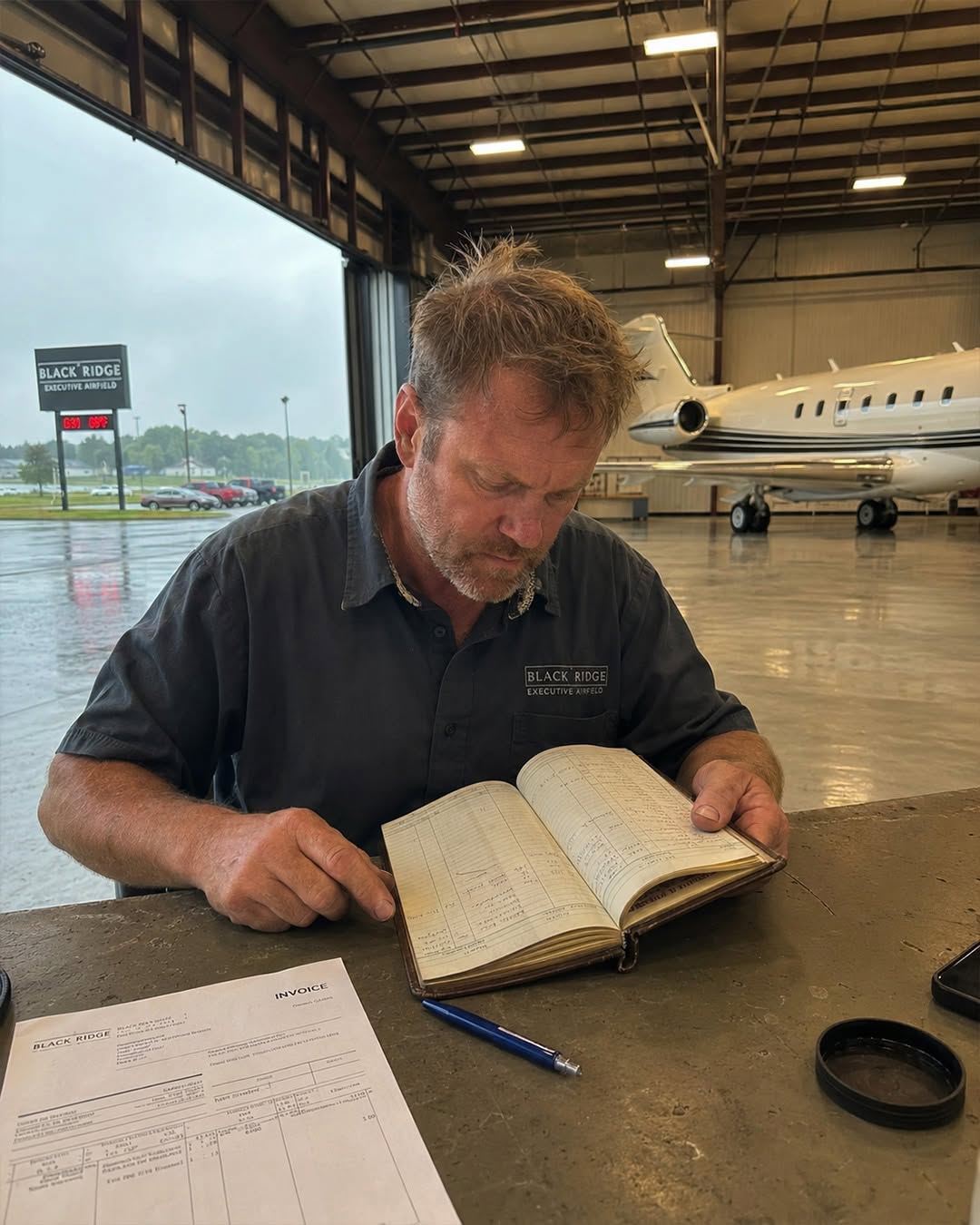
He signed only when every traceability review closed, every replacement component matched, every control response verified, and every open discrepancy had been resolved in the logbook.
He stood in the cockpit for a moment before signing, looking at the small mechanical clock above the radio stack. The crystal was still cracked, but he had cleaned it the first week, gently, with a cloth from his own kit. Some things belonged to the aircraft’s history. Not every old mark needed removal. Some only needed respect.
He wrote his name carefully.
Evan Rourke.
The first pilot to approach the jet after that was Grant Hale.
He reviewed the logbook, read the entry, and nodded once.
“Now,” he said, “we fly.”
Pilots who had refused the aircraft earlier arrived without being summoned. A first officer filed his crew documents. A contract pilot who had driven away without entering the terminal came back with coffee and no apology because none was needed. The signature was there. The work was there. The aircraft was no longer a beautiful question.
On the morning of the test flight, Norah stood beside Evan at the edge of the tarmac in one of his old shop jackets, sleeves rolled at the wrists. Vivien stood a few feet away, hands in the pockets of her coat, watching Grant begin pre-flight.
“You okay?” Norah asked.
Evan looked down at her.
“That’s my line.”
“I’m expanding the family brand.”
He smiled.
The Gulfstream taxied cleanly. At the runway threshold, its engines rose to takeoff power, and the sound rolled across the field in a steady wave. Evan watched the aircraft accelerate, lift, and climb into a pale Carolina sky as if it had been waiting to remember what it was built for.
Norah slipped her hand into his.
He held it.
For two hours, Grant ran the aircraft through a full systems evaluation. Every surface. Every redundant channel. Every automated response. When the jet returned, the landing was smooth enough that no one would have mentioned it on an ordinary day.
That was the point.
No drama.
No surprise.
No story for anyone in the cabin to tell afterward.
Just an aircraft doing exactly what it had been signed to do.
Grant came down the stairs and shook Evan’s hand.
“She’s ready,” he said.
Vivien stepped forward after him.
In front of the audit team, the pilots, Lena, Aaron, Martin, and Norah, she handed Evan a physical check for the full invoice amount plus late interest and reimbursement of every personal advance his team had made.
Evan looked at it.
“The wire cleared yesterday.”
“I know,” Vivien said.
“Then what is this?”
“Proof,” she said. “For my boardroom.”
Months later, that check hung framed outside the Ashcroft Meridian aviation conference room beneath a small brass plate.
No schedule, contract, or executive authority stands above the safety of this aircraft.
Rourke Airworks did not close.
The bank notice came down from the door. The old heater was replaced before winter. Lena got the upgraded diagnostic suite she had been asking for since the previous summer and pretended not to look pleased when it arrived. Aaron and Martin stayed on full-time. A regional carrier offered Rourke Airworks an independent inspection agreement after hearing the story through the quiet aviation network where reputations travel faster than press releases.
Vivien changed the company slower than headlines would have liked and faster than comfortable people preferred. Procurement reports no longer passed through a single operations director. Maintenance concerns had a direct line to the board. Outside inspectors rotated through the fleet. Pilots could enter safety holds without career consequences. When employees raised concerns, Vivien made a point of responding in writing, with their names attached to the solution rather than buried in the file.
She visited Rourke Airworks one Thursday in early spring with two coffees and no assistant.
Evan was replacing a panel on a King Air when she arrived. Norah was at the front desk doing homework, which she insisted was not homework because “college applications are technically future paperwork.” She looked up when Vivien entered.
“You’re the CEO,” Norah said.
“I am.”
“You brought coffee.”
“I did.”
“For my dad?”
“One is for him.”
Norah studied her with Maria’s directness, though she had never met her mother as an adult. “You know he’ll forget to drink it if he’s working.”
“I’m learning that.”
Norah nodded as if this was acceptable progress.
Vivien and Evan sat later in the small office off the main bay. Through the window, Lena moved across the floor with a clipboard, already irritated at something mechanical and happier for it. The shop smelled like metal, paper, coffee, and a future no longer folding in on itself.
Vivien watched Evan look over a new set of maintenance records a customer had brought in.
“How long will it take?” she asked.
Evan turned one page, then another.
“I don’t know yet.”
The customer frowned. “I need it flying by next weekend.”
Evan looked up.
“I’m not paid to get it flying,” he said. “I’m paid to make sure it comes back.”
Vivien smiled at her coffee cup.
Norah, passing the office door with her backpack over one shoulder, said, “That should be on the sign.”
Evan looked toward the old hand-painted sign on the wall, the one she had made at eleven.
“Maybe,” he said.
Ale nie zastąpił go.
Niektóre podpisy mają znaczenie ze względu na nazwę pod nimi.
Niektóre mają znaczenie ze względu na to, czego dana osoba odmówiła napisania nad sobą.
Evan Rourke stracił wpłatę, zaryzykował swój sklep i wyszedł z pokoju pełnego ludzi, którzy myśleli, że pieniądze mogą sprawić, że podpis pojawi się tam, gdzie prawda tego nie robi.
Potem przybyli piloci, otworzyli dziennik i udowodnili to, co każdy uczciwy mechanik już wie.
Maszyna może błyszczeć pod idealnym światłem.
Umowa może zawierać wszystko, co ktoś zapłaci prawnikowi, by napisał.
Harmonogram może brzmieć na tyle pilnie, by zapełnić salę konferencyjną.
Ale niebo nie przejmuje się pilnością.
I żaden pilot godny zaufania nie skłamie tylko dlatego, że z ziemi wygląda na wypolerowany.
Zastrzeżenie: Ta historia jest dziełem fikcji stworzonym w celach rozrywkowych. Wszelkie podobieństwa do prawdziwych osób, wydarzeń czy miejsc są przypadkowe.