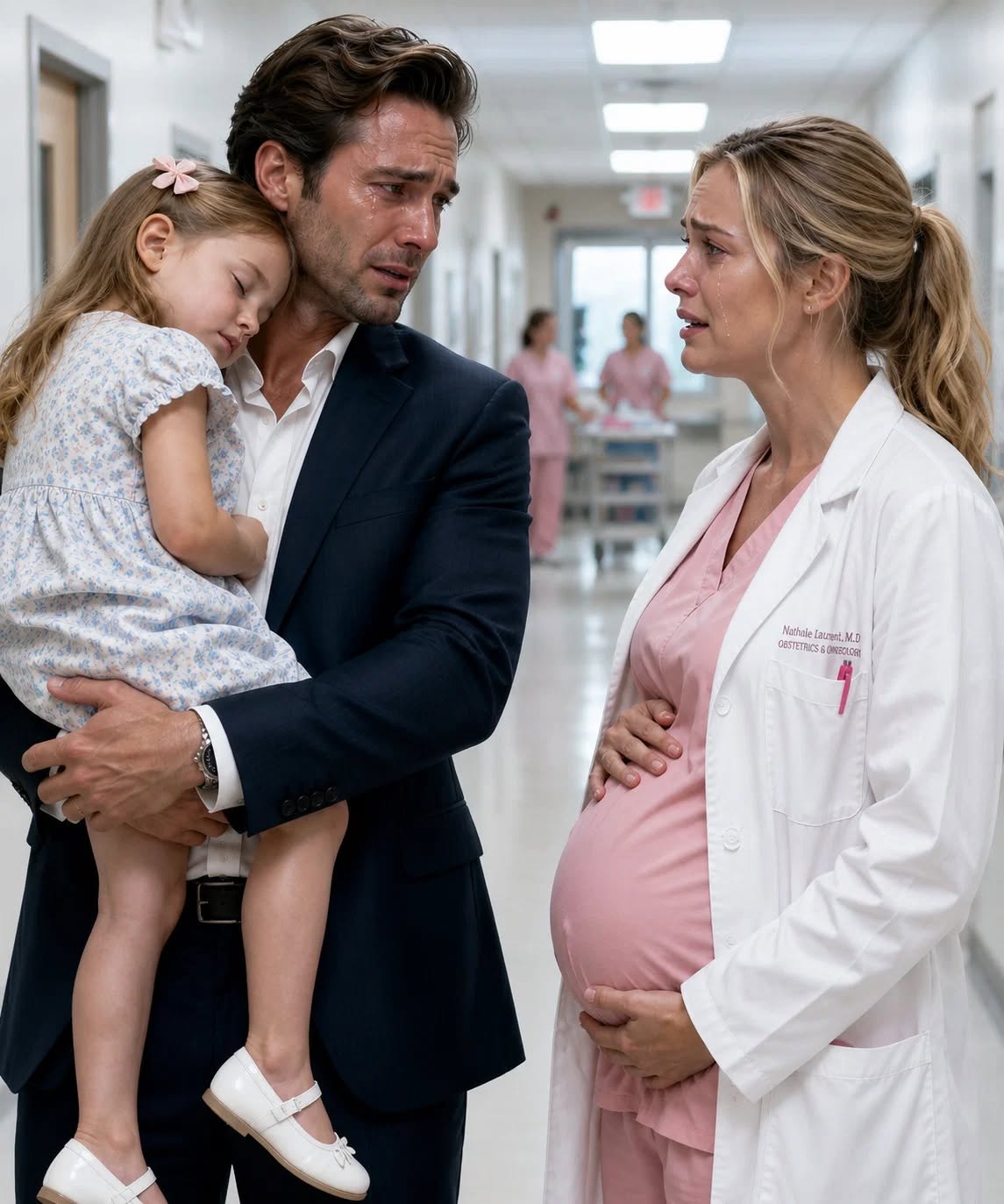
e will save our daughter together.”
Another contraction hit.
The dark elevator became the whole world. Elias took off his jacket, put it behind my head, and laid his shirt beneath me. His hands shook, but his eyes stayed on mine.
“Tell me what to do.”
“When she comes, catch her gently. Check the cord. If she doesn’t cry, rub her back and clear her mouth.”
“I won’t let her go.”
Then the urge to push became impossible to fight.
“Now!” I screamed.
In the dark, trapped between fear and hope, I fought for my baby’s life. Elias did not flinch. He spoke to me through every second.
“One more, Adelaide. I see her.”
With one final push, the pressure released.
Then silence.
“Elias?” I whispered. “Is she breathing?”
“Come on,” he begged. “Breathe for your mother. Breathe for me.”
Then a tiny cry pierced the dark.
I sobbed.
He placed our daughter on my chest. She was impossibly small, but alive.
The lights returned. The elevator descended and opened to Naomi and a team of panicked staff.
“Get a gurney!” Naomi shouted.
We named her Hope.
For three weeks, she stayed in the NICU, growing stronger every day. Elias never left. He slept in a plastic chair beside her incubator and promised her a lifetime of safety.
On the day Hope was cleared to go home, Elias brought me a leather-bound book.
Inside was a hand-drawn blueprint of a house designed for us: Adelaide’s medical library, Sophie’s greenhouse, Hope’s room. Page after page held a ten-year plan—not controlling, but hopeful.
On the final page, he had written:
I am done running from the light.
Will you help me build this, Adelaide?
Then he knelt with a simple braided gold band.
“I want the terrifying, beautiful mess of loving you for the rest of my life. Marry me, Adelaide. Build a life with me.”
I looked at Hope sleeping against my chest.
Then at the man who had delivered her when all the lights went out.
“Yes,” I whispered.
Trzy lata później dom z pierwszego planu stał się rzeczywistością. Sophie słabo grała na pianinie w salonie. Hope śmiała się nieopodal. Golden retriever szczekał na wiewiórki. Robiłam naleśniki, a Elias wracał z ziarnami kawy i całowałem mąkę z mojego nosa.
Zabytkowa pozytywka grała w rogu swój cichy walc.
Zniszczone rzeczy, pięknie naprawione.
Nauczyłam się, że miłość to nie znalezienie kogoś niezłamanego. Chodzi o znalezienie kogoś na tyle odważnego, by usiąść z tobą w ciemności, naprawić to, co da się naprawić, i iść z tobą w światło.